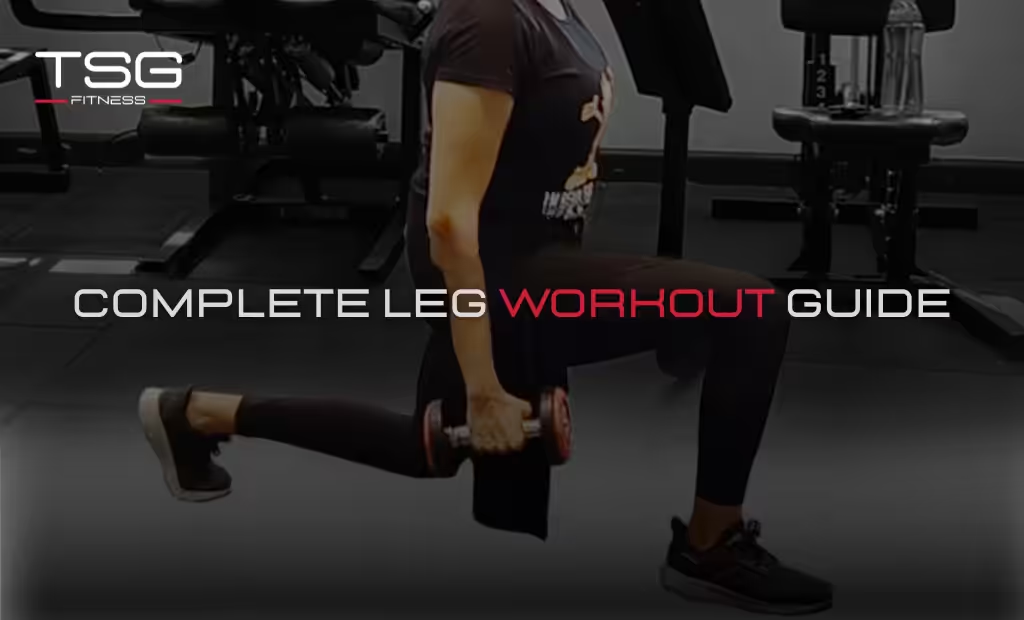
Building powerful legs requires strategic training that targets every muscle from the glutes down to the calves, incorporating both compound movements and isolation exercises. A Complete Leg Workout Guide encompasses proper form, progressive overload, and recovery protocols that maximize muscle growth and strength development. TSG Fitness combines cutting-edge assessment technology with evidence-based training methods to help athletes develop exceptional lower body power, strength, and muscular endurance through comprehensive leg training programs.
How to warm up and cool down properly
Proper warm-up prepares the nervous system, increases muscle temperature, and reduces injury risk during intense leg training. An effective pre-workout routine should include 5-10 minutes of light cardiovascular activity to increase heart rate and blood flow to working muscles. Dynamic movements like leg swings, walking lunges, and bodyweight squats gradually introduce the movement patterns you’ll perform under load.
TSG Fitness emphasizes functional warm-up protocols that activate the hip, knee, and ankle joints through their full range of motion. Cat-cow stretches mobilize the spine, 90/90 hip switches target hip internal and external rotation, while deep squat holds with thoracic spine rotation prepare the entire kinetic chain for heavy loading. This comprehensive approach ensures optimal performance and safety during leg workouts.
Cool-down protocols should reverse the physiological stress imposed during training through static stretching and light movement. Hold stretches for 30-60 seconds targeting the quadriceps, hamstrings, glutes, and calves while focusing on deep breathing to activate the parasympathetic nervous system. This recovery phase reduces muscle tension, improves flexibility, and accelerates the healing process between training sessions.
Exercises for your leg workout
Effective leg training requires exercise selection that targets all major muscle groups through various movement patterns and loading schemes. Primary compound movements like squats and deadlifts form the foundation by allowing maximum loading potential and multi-joint activation. Secondary exercises provide targeted muscle stimulation while accessory movements address imbalances and weak points.
The most productive leg exercises combine bilateral and unilateral patterns, vertical and horizontal loading, and both hip-dominant and knee-dominant movement patterns. This comprehensive approach ensures balanced development across the quadriceps, hamstrings, glutes, and calves while improving functional strength and athletic performance.
Front squat
Front squats challenge the anterior core and emphasize quadriceps development while requiring exceptional thoracic spine mobility. The front-loaded position forces an upright torso, reducing lumbar stress compared to back squats while providing unique training stimulus for the upper back and core musculature.
Proper technique involves cleaning dumbbells to the front of the shoulders, maintaining an upright chest throughout the descent, and driving through the full foot during the ascent. The movement should reach sufficient depth where the hip crease passes below the knee while maintaining heel contact with the ground. If mobility limitations prevent proper depth, elevate the heels with plates or blocks to achieve optimal positioning.
Progressive overload can be achieved through increased weight, additional repetitions, or tempo modifications. Advanced practitioners may incorporate pause squats at the bottom position to eliminate the stretch-reflex and develop starting strength from a dead stop.
Romanian deadlift
Romanian deadlifts (RDLs) target the posterior chain through hip-hinge mechanics, emphasizing hamstring and glute development. This exercise teaches proper hip hinge patterns essential for athletic performance while building strength in the often-underdeveloped posterior muscles.
Execute RDLs by standing with feet hip-width apart, holding dumbbells with an overhand grip. Initiate the movement by pushing the hips backward while maintaining a neutral spine, lowering the weights until feeling a deep stretch in the hamstrings. The knee bend should be minimal, focusing on hip flexion rather than knee movement.
The eccentric phase should be controlled and deliberate, taking 2-3 seconds to reach the bottom position. Drive through the heels and squeeze the glutes forcefully at the top to complete each repetition. This exercise responds well to moderate to heavy loading with 6-12 repetitions per set.
Good mornings
Good morning exercises develop posterior chain strength and teach proper hip hinge mechanics using axial loading. This movement requires exceptional hamstring flexibility and core stability while building strength throughout the erector spinae, glutes, and hamstrings.
Perform good mornings with a barbell positioned across the upper trapezius, similar to a back squat setup. Maintain a proud chest and neutral spine while hinging at the hips, pushing the glutes backward until reaching a comfortable stretch in the hamstrings. The movement should be slow and controlled, emphasizing the eccentric portion.
Safety considerations include starting with light weights and focusing on mobility development before progressing to heavier loads. Individuals with lower back issues should approach this exercise cautiously and consider alternatives like Romanian deadlifts that provide similar benefits with reduced spinal loading.
Walking lunges
Walking lunges combine unilateral strength development with dynamic movement patterns that improve balance, coordination, and functional strength. This exercise addresses strength imbalances between legs while challenging the stabilizing muscles around the hip, knee, and ankle joints.
Execute walking lunges by taking a large step forward, lowering the back knee toward the ground while maintaining an upright torso. The front thigh should be parallel to the ground with the knee tracking over the toes. Push off the front leg to bring the back leg forward into the next repetition.
Advanced variations include adding external load through dumbbells or a weighted vest, performing reverse walking lunges, or incorporating lateral movement patterns. TSG Fitness incorporates walking lunges in functional strength assessments to evaluate unilateral lower body strength and movement quality.
Reverse lunge
Reverse lunges reduce forward knee stress compared to forward lunges while effectively targeting the quadriceps and glutes. The backward stepping motion allows for better hip positioning and reduces patellar stress, making this variation suitable for individuals with knee concerns.
Begin in a standing position with feet hip-width apart, then step backward with one leg while lowering the back knee toward the ground. The front leg should bear most of the load while maintaining an upright torso throughout the movement. Push through the front heel to return to the starting position.
Research demonstrates that reverse lunges reduce shear forces at the knee joint compared to forward lunges, making them a safer option for individuals with previous knee injuries. The exercise can be progressively loaded with dumbbells, barbells, or other external resistance as strength improves.
Lateral lunge
Lateral lunges address movement in the frontal plane, targeting the hip abductors and adductors while improving lateral hip mobility. This exercise fills a crucial gap in traditional sagittal-plane training by challenging muscles and movement patterns often neglected in conventional workouts.
Perform lateral lunges by stepping out to one side while pushing the hips back and shifting weight to the stepping leg. The opposite leg should remain straight as you lower into the side lunge position. The movement emphasizes the glutes, quadriceps, and adductor muscles of the working leg.
Form considerations include keeping the knees aligned with the toes, maintaining a neutral spine, and controlling the descent and ascent phases. The exercise can be performed with bodyweight initially, progressing to holding a dumbbell goblet-style or using dumbbells in each hand.
Step up
Step-ups develop unilateral lower body strength while challenging balance and proprioception. This exercise translates well to athletic activities and daily movements like climbing stairs, making it highly functional for overall leg development.
Select a box or platform height that allows the thigh to be parallel or slightly above parallel when the foot is placed on the surface. Step up using only the elevated leg’s power, avoiding pushing off the ground leg. The movement should be controlled with emphasis on the eccentric lowering phase.
Progressive overload occurs through increased step height, added external load, or performing the exercise with a deficit to increase range of motion. TSG Fitness utilizes step-ups in functional movement assessments to evaluate single-leg strength and stability patterns.
Glute bridge
Glute bridges isolate the gluteal muscles through hip extension while providing a foundation for more advanced hip thrust variations. This exercise addresses hip flexor tightness from prolonged sitting while activating the often-dormant glute muscles essential for lower body function.
Lie supine with knees bent and feet flat on the ground, then drive through the heels to lift the hips while squeezing the glutes at the top position. The movement should create a straight line from the knees through the hips to the shoulders. Hold the top position briefly before lowering with control.
Glute bridges serve as an excellent activation exercise during warm-up routines and can be progressively loaded with barbells, dumbbells, or resistance bands. Single-leg variations increase difficulty while addressing imbalances between sides.
Hip thrust
Hip thrusts represent the gold standard for glute development, producing superior muscle activation compared to squats according to EMG research. This exercise allows for heavy loading at the point of maximum muscle contraction, making it exceptionally effective for building glute strength and size.
Position the upper back against a bench with feet planted firmly on the ground, knees bent to approximately 90 degrees. A barbell or dumbbell rests across the hips as you drive through the heels to lift the weight. The movement emphasizes the top portion where the glutes are maximally activated.
The hip thrust loads the glutes at and beyond neutral hip position, unlike vertical movements that lose tension at the top. Research demonstrates superior upper and lower glute hypertrophy from hip thrusts compared to squats over a six-week training period. Proper setup requires matching bench height to lower leg length for optimal biomechanics.
Goblet squat
Goblet squats provide an excellent introduction to squat mechanics while offering upper body engagement through the anterior-loaded position. The front-loaded weight encourages an upright torso and proper squat depth while being more accessible than barbell variations for beginners.
Hold a dumbbell vertically against the chest with both hands, maintaining the weight close to the body throughout the movement. Descend into a squat by pushing the hips back and bending the knees while keeping the chest up and core engaged. The elbows should track between the knees at the bottom position.
Goblet squats effectively teach proper squat mechanics and can be used as a warm-up exercise or loaded heavily for strength development. The anterior loading pattern strengthens the core and upper back while providing a stable platform for learning squat movement patterns.
Leg press
Leg press machines provide a stable platform for heavy loading while reducing the stabilization demands of free weight squats. This exercise allows for focused quadriceps, hamstring, and glute development while minimizing spinal loading, making it suitable for individuals with back concerns.
Position yourself on the leg press machine with feet placed shoulder-width apart on the platform. Lower the weight by bending the knees and hips until reaching approximately 90 degrees of knee flexion, then press through the full foot to return to the starting position. Avoid locking out the knees completely at the top.
Foot placement variations alter the emphasis on different muscle groups. Higher foot placement targets the glutes and hamstrings more, while lower placement emphasizes the quadriceps. The leg press allows for high-volume training and can be used effectively in both strength and hypertrophy protocols.
Leg curl
Leg curls provide isolated hamstring development by targeting knee flexion function. This exercise addresses a common weakness in many individuals whose hamstrings are underdeveloped relative to their quadriceps strength.
Lying leg curls involve positioning face-down on the machine with the pad resting just above the ankles. Flex the knees to bring the heels toward the glutes while maintaining hip contact with the pad. The movement should be controlled with emphasis on both the concentric lifting phase and eccentric lowering phase.
Seated and standing leg curl variations provide different muscle fiber recruitment patterns and can be alternated to provide training variety. The hamstrings respond well to both heavy, low-repetition training and lighter, high-repetition protocols depending on the training phase and individual goals.
Bulgarian split squat
Bulgarian split squats represent one of the most challenging unilateral lower body exercises, requiring significant strength, balance, and mobility. The rear-foot-elevated position increases the range of motion and places greater demand on the working leg compared to standard lunges.
Position the rear foot on a bench or elevated surface approximately two feet behind the working leg. Lower the body by bending the front knee until the thigh is parallel to the ground, keeping most of the weight on the front leg. The rear leg should provide minimal support and primarily serves to maintain balance.
This exercise effectively identifies and addresses strength imbalances between legs while developing unilateral strength and stability. Progressive overload can be achieved through added external load, increased range of motion, or performing the exercise with a deficit under the working foot.
Single-leg deadlift
Single-leg deadlifts challenge unilateral posterior chain strength while developing balance, proprioception, and hip stability. This exercise mimics many athletic movement patterns and helps identify strength imbalances between the left and right sides of the body.
Stand on one leg while holding a dumbbell in the opposite hand, then hinge at the hip by pushing the glutes backward and lowering the weight toward the ground. The non-standing leg should extend behind the body as a counterbalance. The movement emphasizes the hamstrings and glutes of the standing leg.
Proper execution requires maintaining a neutral spine throughout the movement while avoiding compensation patterns like hip rotation or lateral flexion. Start with bodyweight only and progress to light external loads as balance and strength improve. TSG Fitness incorporates single-leg deadlifts in movement assessments to evaluate unilateral posterior chain function.
How many sets and reps should you do in your leg workout?
Optimal set and rep schemes for leg training depend on specific goals, training experience, and individual recovery capacity. Strength development typically requires 3-5 sets of 1-6 repetitions at 85-95% of one-repetition maximum, while hypertrophy protocols utilize 3-4 sets of 8-15 repetitions at 65-80% intensity.
For compound movements like squats and deadlifts, 3-4 sets of 4-8 repetitions provide an excellent balance between strength and muscle building benefits. Isolation exercises like leg curls and leg extensions respond well to higher repetition ranges of 12-20 reps for 2-3 sets to maximize metabolic stress and muscle pump.
TSG Fitness personalizes set and rep recommendations based on individual assessments including strength testing, movement quality evaluation, and recovery monitoring. Beginners should start with 2-3 sets per exercise, while advanced trainees may benefit from 4-6 sets depending on the exercise and training phase. Weekly volume should range from 10-20 sets per muscle group for optimal hypertrophy.
How many times per week should you work legs?
Leg training frequency should balance stimulus and recovery to maximize adaptation while preventing overreaching. Most individuals benefit from training legs 2-3 times per week, allowing 48-72 hours of recovery between sessions. This frequency provides sufficient stimulus for muscle protein synthesis while permitting adequate recovery.
Beginners can effectively train legs 2 times per week using full-body or upper/lower split routines. Intermediate and advanced trainees may benefit from 3 sessions per week, potentially using different exercise selections or training focuses for each session. For example, one session might emphasize heavy compound movements, another might focus on unilateral work, and a third could target isolation exercises.
Training frequency can be periodized throughout the year, with higher frequencies during muscle-building phases and lower frequencies during strength-focused blocks. TSG Fitness designs training frequencies based on individual recovery capacity, training history, and lifestyle factors including sleep quality, stress levels, and nutritional status.
BEST EXERCISES FOR MUSCLE AND STRENGTH
The most effective leg exercises for muscle and strength combine maximum loading potential with complete muscle activation patterns. Compound movements form the foundation of effective leg training by allowing progressive overload while engaging multiple muscle groups simultaneously.
Primary Strength Builders:
- Back Squat: The king of leg exercises, targeting quadriceps, glutes, and requiring core stability
- Deadlift: Develops posterior chain strength and total-body power
- Front Squat: Emphasizes quadriceps while challenging core stability
Secondary Compound Movements:
- Romanian Deadlift: Targets hamstrings and glutes through hip hinge patterns
- Bulgarian Split Squat: Develops unilateral strength and addresses imbalances
- Hip Thrust: Maximizes glute activation and development
These exercises should form the core of any serious leg training program, with isolation exercises serving as accessories to address specific weaknesses or provide additional volume for targeted muscle groups.
THE ULTIMATE LEG WORKOUT GUIDE
An ultimate leg workout systematically targets all major muscle groups through varied movement patterns and loading schemes. The session should begin with compound movements when energy levels are highest, progress to secondary exercises, and finish with isolation work for metabolic stress.
Sample Ultimate Leg Workout:
- Barbell Back Squat: 4 sets × 6-8 reps
- Romanian Deadlift: 3 sets × 8-10 reps
- Bulgarian Split Squat: 3 sets × 10 reps per leg
- Leg Press: 3 sets × 12-15 reps
- Leg Curl: 3 sets × 12-15 reps
- Standing Calf Raise: 4 sets × 15-20 reps
This workout targets the quadriceps, hamstrings, glutes, and calves through both bilateral and unilateral movement patterns. Rest periods should be 2-3 minutes between compound exercises and 60-90 seconds between isolation movements. TSG Fitness customizes workout parameters based on individual assessments and goals.
LEG MUSCLE ANATOMY
Understanding leg muscle anatomy guides exercise selection and programming decisions for optimal development. The major muscle groups include the quadriceps (anterior thigh), hamstrings (posterior thigh), glutes (hip extensors), and calves (posterior lower leg).
Quadriceps Complex
The quadriceps femoris consists of four muscles: rectus femoris, vastus lateralis, vastus medialis, and vastus intermedius. Only the rectus femoris crosses both hip and knee joints, while the others span only the knee. These muscles primarily extend the knee and assist in hip flexion. The quadriceps generates the most force when the muscle is lengthened, explaining why full-range squats outperform partial movements for hypertrophy.
Hamstring Group
The hamstrings include biceps femoris, semitendinosus, and semimembranosus muscles located in the posterior thigh. These muscles flex the knee and extend the hip, serving as antagonists to the quadriceps. The hamstrings are particularly active during the eccentric phase of squatting and during hip-hinge movements like deadlifts.
Gluteal Complex
The glutes comprise gluteus maximus, medius, and minimus muscles responsible for hip extension, abduction, and rotation. The gluteus maximus is the largest and most powerful muscle in the human body, playing crucial roles in standing, climbing stairs, and athletic performance. Hip thrusts provide superior glute activation compared to squats according to EMG studies.
WHY ARE LEG WORKOUTS IMPORTANT?
Leg workouts provide numerous benefits extending beyond muscular development to include improved athletic performance, injury prevention, and metabolic enhancement. The leg muscles represent the largest muscle mass in the human body, making their training essential for overall strength and functionality.
Performance Benefits: Strong legs form the foundation for virtually all athletic activities, from sprinting and jumping to lifting and carrying. The legs generate force that transfers through the kinetic chain to the upper body, making lower body strength crucial for total-body power development.
Injury Prevention: Balanced leg strength reduces injury risk by ensuring proper force distribution across joints and maintaining optimal movement patterns. Weak or imbalanced leg muscles contribute to knee, hip, and lower back injuries commonly seen in both athletes and sedentary individuals.
Metabolic Advantages: Training large muscle groups like those in the legs creates significant metabolic demand, leading to increased calorie expenditure both during and after exercise. This makes leg training particularly effective for body composition improvement and overall health enhancement.
TSG Fitness emphasizes functional leg strength that translates to real-world activities and athletic performance. Our assessment protocols identify movement limitations and strength imbalances that can be addressed through targeted leg training programs.
WHAT IS THE BEST LEG WORKOUT?
The best leg workout depends on individual goals, training experience, and available equipment. However, effective programs share common characteristics: compound movement emphasis, progressive overload application, and balanced muscle group targeting.
For beginners, a simple routine focusing on movement quality and basic strength development works best:
- Goblet Squat: 3 sets × 10-12 reps
- Romanian Deadlift: 3 sets × 8-10 reps
- Reverse Lunge: 2 sets × 8 reps per leg
- Glute Bridge: 2 sets × 12-15 reps
Intermediate trainees benefit from increased volume and exercise variety:
- Back Squat: 4 sets × 6-8 reps
- Romanian Deadlift: 3 sets × 8-10 reps
- Bulgarian Split Squat: 3 sets × 10 reps per leg
- Leg Press: 3 sets × 12-15 reps
- Leg Curl: 3 sets × 12-15 reps
Advanced practitioners require periodized programming with varied training focuses and specialized techniques. TSG Fitness designs individualized programs based on comprehensive movement assessments and performance testing.
WHAT ARE THE BEST LEG EXERCISES FOR KNEES?
Knee-friendly leg exercises minimize joint stress while maintaining training effectiveness. These exercises typically avoid excessive knee flexion, reduce shear forces, and emphasize controlled movement patterns that protect the joint structures.
Safest Leg Exercises for Knee Issues:
- Romanian Deadlifts: Minimal knee flexion with emphasis on hip movement
- Hip Thrusts: Fixed knee position focusing on hip extension
- Reverse Lunges: Reduced forward knee movement compared to forward lunges
- Box Squats: Limited depth reducing knee stress
- Sled Pushes: Minimal knee flexion with functional movement patterns
These exercises allow continued leg training while managing knee discomfort or previous injuries. The reverse lunge specifically reduces patellar stress and shear forces compared to forward lunging patterns, making it particularly suitable for individuals with anterior knee pain.
Proper progression involves starting with bodyweight movements and gradually adding external load as tolerance improves. TSG Fitness incorporates movement screening to identify knee limitations and designs appropriate exercise progressions.
WHAT ARE THE BEST EXERCISES FOR CALVES?
Effective calf training must target both the gastrocnemius and soleus muscles through specific joint positioning and exercise selection. The gastrocnemius responds best to straight-leg movements, while the soleus requires bent-knee positions for optimal activation.
Gastrocnemius-Focused Exercises:
- Standing Calf Raises: Straight leg position maximizes gastrocnemius activation
- Donkey Calf Raises: Enhanced stretch and range of motion
- Toe Touch Farmer’s Walks: Dynamic movement with calf emphasis
Soleus-Targeted Exercises:
- Seated Calf Raises: Bent knee position emphasizes soleus muscle
- Tip-Toe Farmer’s Walk: Loaded walking on toes with knee bend
- Standing Soleus Raises: Bent knee calf raises while standing
The soleus muscle is often underdeveloped relative to the gastrocnemius, making targeted training essential for complete calf development. Research suggests that soleus strengthening may also provide knee protection benefits, making it valuable for overall lower limb health.
Progressive overload for calves can be challenging due to their high proportion of slow-twitch muscle fibers. Combining heavy loading with higher repetition ranges and varied exercises provides the best stimulus for calf muscle growth.
WHAT IS THE BEST DUMBBELL LEGS WORKOUT?
Dumbbell leg workouts offer versatility and convenience while providing effective muscle stimulation. These routines can be performed at home or in commercial gyms with minimal equipment requirements while targeting all major leg muscle groups.
Complete Dumbbell Leg Routine:
- Dumbbell Front Squat: 4 sets × 8-10 reps
- Romanian Deadlift: 3 sets × 10-12 reps
- Reverse Lunge: 3 sets × 12 reps per leg
- Bulgarian Split Squat: 3 sets × 10 reps per leg
- Dumbbell Calf Raise: 3 sets × 15-20 reps
This routine provides comprehensive leg development through varied movement patterns and loading schemes. The exercises can be performed as a circuit for metabolic conditioning or with traditional rest periods for strength development.
Dumbbell training offers several advantages including unilateral loading, enhanced range of motion, and improved stabilizer muscle activation. The independent nature of dumbbells helps address strength imbalances while providing a training stimulus similar to barbell exercises.
HOW TO DO LEG WORKOUTS AT HOME
Home leg workouts can be highly effective using bodyweight exercises and minimal equipment. These routines focus on movement quality and high-volume training to provide adequate stimulus without heavy external loads.
Essential Home Leg Exercises:
- Bodyweight Squats: Foundation movement targeting quads and glutes
- Single-Leg Romanian Deadlifts: Unilateral posterior chain development
- Reverse Lunges: Knee-friendly unilateral exercise
- Glute Bridges: Targeted glute activation and strength
- Calf Raises: Simple yet effective for lower leg development
Sample 7-Minute Home Leg Workout:
- Bulgarian Split Squats: 40 seconds each leg
- Single-Leg Romanian Deadlifts: 40 seconds each leg
- Jump Squats: 40 seconds
- Reverse Lunges: 40 seconds each leg
- Sumo Squat Pulses: 40 seconds
- Wall Sit: 40 seconds
- Calf Raises: 40 seconds
This time-efficient routine targets all major leg muscles while requiring no equipment. The workout can be scaled by adjusting work periods, adding external load through backpacks or water bottles, or increasing the number of rounds performed.
Progressive overload in home workouts occurs through increased repetitions, longer time under tension, or adding plyometric elements to increase intensity. TSG Fitness offers online coaching programs specifically designed for home training environments.
Hack Squats
Hack squats provide a machine-based alternative to free weight squats while allowing heavy loading with reduced stabilization demands. The angled platform and back support enable focus on quadriceps development while minimizing lower back stress.
Position yourself on the hack squat machine with shoulders against the pads and feet placed shoulder-width apart on the platform. Lower the weight by bending the knees and hips until reaching approximately 90 degrees of knee flexion, then press through the full foot to return to the starting position.
The hack squat allows for heavy loading and can be used effectively for both strength and hypertrophy development. Foot placement variations can alter muscle emphasis, with higher placement targeting glutes and hamstrings more, while lower placement emphasizes quadriceps activation.
Leg Press
The leg press machine provides stable bilateral leg training while allowing for heavy loading and varied foot positions. This exercise removes the stability demands of free weight squats while maintaining effective muscle stimulation for the quadriceps, hamstrings, and glutes.
Proper leg press technique involves controlled descent to approximately 90 degrees of knee flexion followed by explosive pressing through the full foot. Avoid extreme knee flexion that may compromise knee joint integrity, and maintain constant tension throughout the range of motion.
The leg press accommodates various training goals through load and repetition manipulation. Heavy loading with 6-8 repetitions builds strength, while moderate loads with 12-20 repetitions target muscular endurance and hypertrophy.
Leg Extension
Leg extensions provide isolated quadriceps development by targeting knee extension function while minimizing hip involvement. This machine-based exercise allows for precise loading and is particularly useful for rehabilitation or addressing quadriceps weaknesses.
Sit on the leg extension machine with the back pad supporting your spine and the ankle pad positioned just above the foot. Extend the knees by contracting the quadriceps, lifting the weight to full knee extension before lowering with control.
While leg extensions effectively isolate the quadriceps, they should complement rather than replace compound movements in comprehensive leg training programs. The exercise is particularly valuable for pre-exhaustion protocols or as a finishing movement after compound exercises.
Leg Curl
Leg curls target the hamstrings through knee flexion movement patterns. Various machine configurations including lying, seated, and standing versions provide different muscle fiber recruitment patterns and training variety.
Execute lying leg curls by positioning face-down on the machine with the ankle pad resting just above the heel. Flex the knees to bring the heels toward the glutes while maintaining hip contact with the pad. Control both the lifting and lowering phases of the movement.
Hamstring development often lags behind quadriceps strength in many individuals, making leg curls an important accessory exercise. The exercise responds well to various rep ranges and can be used effectively in both strength and hypertrophy protocols.
Romanian Deadlifts
Romanian deadlifts represent one of the most effective posterior chain exercises, targeting the hamstrings, glutes, and erector spinae through hip hinge mechanics. This exercise teaches proper movement patterns while building strength in frequently underdeveloped muscles.
Stand with feet hip-width apart holding dumbbells with an overhand grip in front of the thighs. Initiate the movement by pushing the hips backward while maintaining a neutral spine, lowering the weights until feeling a deep hamstring stretch. Drive through the heels and squeeze the glutes to return to the starting position.
The Romanian deadlift emphasizes the eccentric lengthening of the hamstrings, making it particularly effective for muscle development and injury prevention. Proper hip hinge mechanics transfer to numerous athletic and daily activities, making this exercise highly functional.
Standing Calf Raises
Standing calf raises target the gastrocnemius muscle through plantarflexion movement at the ankle joint. This exercise can be performed with bodyweight, dumbbells, or specialized calf raise machines for progressive overload.
Stand with the balls of the feet on a stable surface with heels hanging off the edge. Rise up onto the toes by contracting the calf muscles, hold the top position briefly, then lower the heels below the starting level for a complete stretch. The movement should be slow and controlled with emphasis on the full range of motion.
Calf development requires consistent training due to their high proportion of slow-twitch muscle fibers and daily loading from walking and standing activities. Combining heavy loading with higher repetitions and varied foot positions provides comprehensive calf development.
Before Starting Your Leg Workout
Proper preparation significantly impacts workout quality, safety, and results. Pre-workout protocols should address nutrition, mental preparation, and physical readiness through systematic warm-up procedures that prepare the body for intense training demands.
Eat Before You Train
Adequate pre-workout nutrition provides energy for high-intensity training while supporting optimal performance and recovery. Consume a mixed macronutrient meal 2-3 hours before training, including carbohydrates for energy, protein for amino acid availability, and moderate fats for sustained energy release.
For workouts within 60 minutes of eating, focus on easily digestible carbohydrates like bananas, dates, or sports drinks to provide quick energy without gastrointestinal distress. Hydration status should be optimized by consuming 16-20 ounces of water 2-3 hours before exercise and an additional 8 ounces 15-20 minutes prior to training.
TSG Fitness provides comprehensive nutritional counseling to optimize pre and post-workout nutrition strategies based on individual needs and training goals. Proper fueling strategies can significantly enhance training capacity and adaptation rates.
Form Over Weight
Movement quality should always take precedence over load lifted, especially during the learning phases of new exercises. Perfect technique development creates the foundation for long-term progress while minimizing injury risk that could derail training consistency.
Focus on controlling the weight throughout the entire range of motion, maintaining proper joint alignment, and engaging the target muscles rather than simply moving the load. Video analysis or working with qualified trainers can help identify and correct technical deficiencies before they become ingrained movement patterns.
TSG Fitness emphasizes movement quality assessment and correction through detailed form analysis and personalized coaching. Our trainers ensure clients master proper mechanics before progressing to heavier loads or more complex movements.
Keep The Intensity High
Training intensity must be sufficient to stimulate adaptation while remaining sustainable throughout the program duration. High intensity doesn’t necessarily mean maximum weight, but rather training at the appropriate percentage of maximum capacity for the given repetition range and training goal.
Maintain focus and purpose throughout each set, avoiding excessive rest periods that can diminish training density and metabolic stress. Use rest periods strategically, with longer rests for heavy compound movements and shorter rests for isolation exercises.
Progressive overload should be applied systematically by gradually increasing weight, repetitions, or training volume over time. TSG Fitness utilizes objective measures like velocity-based training and performance tracking to ensure optimal intensity prescription.
Frequently Asked Questions About Complete Leg Workout Guide
How long should a complete leg workout take?
An effective leg workout typically requires 60-90 minutes including warm-up, training, and cool-down phases. This duration allows sufficient volume for all major muscle groups while maintaining exercise quality. TSG Fitness designs time-efficient programs that maximize results within available time constraints.
Can I train legs every day?
Daily leg training isn’t recommended for most individuals due to the need for adequate recovery between sessions. The large muscle mass and high training intensity of leg workouts require 48-72 hours recovery between sessions. Light activities like walking or gentle stretching can be performed on off days.
Should I do cardio on leg day?
Light cardiovascular activity can be beneficial for warm-up and cool-down phases, but intense cardio should be avoided immediately after leg training to prevent compromising recovery. If cardiovascular training is necessary, perform it several hours after leg training or on separate days.
How do I know if I’m training legs hard enough?
Indicators of adequate training intensity include progressive strength gains, muscle soreness 24-48 hours post-workout, and difficulty completing the final repetitions of each set. TSG Fitness uses objective measures including strength testing and body composition analysis to track training effectiveness.
What should I eat after a leg workout?
Post-workout nutrition should include high-quality protein (25-40g) and carbohydrates (30-60g) within 2 hours of training to optimize recovery and muscle protein synthesis. Whole food options include lean meats with rice or potatoes, while convenient alternatives include protein shakes with fruit.
A Complete Leg Workout Guide encompasses far more than exercise selection, integrating proper programming, recovery protocols, and individualized assessment to maximize lower body development. TSG Fitness combines scientific training principles with cutting-edge assessment technology to design comprehensive leg training programs that build powerful, functional lower body strength while minimizing injury risk and optimizing long-term athletic development.
 Contact Us