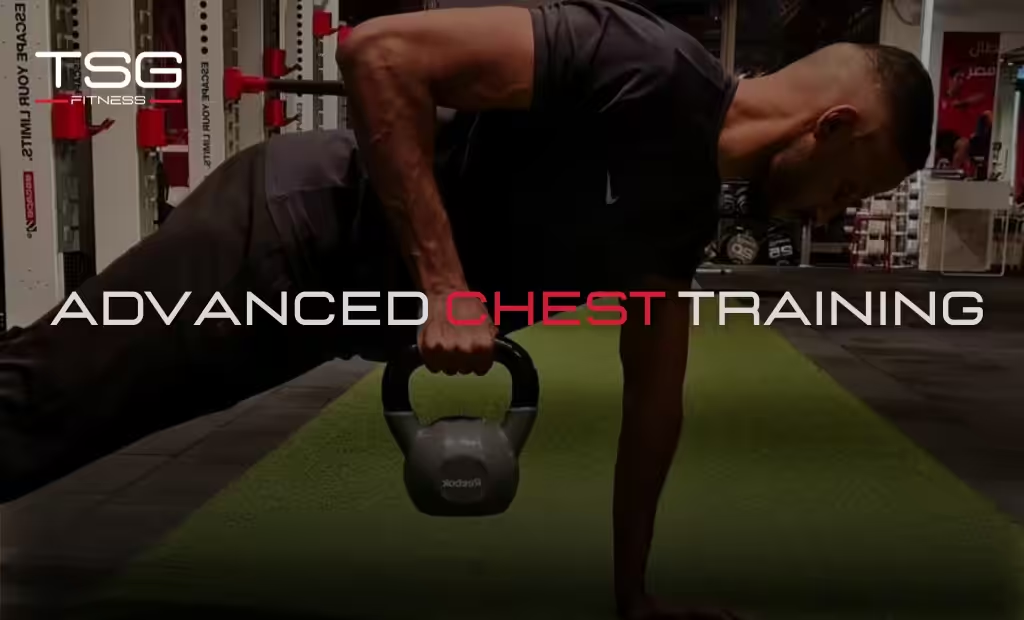
Most lifters hit a plateau with basic bench press routines, but Advanced Chest Training unlocks new levels of muscle development through scientific programming, targeted muscle activation, and periodized progression schemes. TSG Fitness combines cutting-edge training methodologies with personalized assessments to help serious athletes break through strength plateaus and achieve exceptional pectoral development that goes far beyond conventional approaches.
Best Chest Exercises for Building Muscle
Scientific research utilizing EMG (electromyography) analysis reveals that barbell bench press generates 100% muscle activation, making it the gold standard for chest development. However, complete chest training requires strategic exercise selection beyond just bench pressing. The pec deck machine achieves 98% activation, while bent-forward cable crossovers reach 93% – proving that both compound and isolation movements deserve places in advanced protocols.
Advanced practitioners must prioritize exercises that allow progressive overload while targeting different fiber orientations within the pectoralis major. TSG Fitness utilizes K-Force technology to measure power output and velocity during chest exercises, ensuring each movement contributes optimally to strength and hypertrophy gains. This data-driven approach eliminates guesswork and maximizes training efficiency.
Understanding The Chest Musculature
The pectoralis major consists of three distinct regions requiring targeted stimulation: the clavicular head (upper chest), sternal head (middle chest), and costal head (lower chest). Each region responds differently to training angles and loading patterns, making anatomical understanding crucial for complete development.
Muscle fiber architecture determines optimal training strategies. The upper chest fibers run at a steep angle from the clavicle, responding best to incline movements between 15-45 degrees. Middle chest fibers originate from the sternum and align horizontally, making flat pressing movements ideal. Lower fibers attach to the costal cartilages and benefit from decline angles and high-to-low cable movements.
CHEST MUSCLES ANATOMY
The pectoralis major originates from three distinct anatomical sites and inserts into the lateral lip of the bicipital groove of the humerus. This fan-shaped muscle performs adduction, horizontal adduction, and internal rotation of the arm. Understanding these movement patterns guides exercise selection for comprehensive development.
Biomechanical analysis shows that chest muscles generate maximum force when stretched under load. This principle explains why full range of motion pressing movements consistently outperform partial repetitions for hypertrophy. Research confirms that touching the chest during bench press and allowing dumbbells to travel below chest level maximizes muscle activation.
MID CHEST FIBERS (STERNAL HEAD)
The sternal head comprises the largest portion of the pectoralis major and responds exceptionally well to horizontal pressing movements. These fibers run perpendicular to the sternum, making flat bench press, horizontal cable crossovers, and machine chest press optimal choices for targeted development.
Training intensity for the sternal head should emphasize moderate to heavy loads (75-85% 1RM) to maximize mechanical tension. Research on untrained subjects performing bench press training at 75% 1RM for 24 weeks demonstrated significant increases in muscle thickness throughout the chest region.
LOWER CHEST FIBERS (ABDOMINAL HEAD)
The costal or abdominal head originates from the cartilages of the sixth and seventh ribs. These fibers require decline pressing movements and high-to-low cable exercises for optimal stimulation. Weighted dips provide exceptional activation of the lower chest while allowing significant progressive overload potential.
Many advanced trainees neglect the lower chest, creating imbalanced development. TSG Fitness assessment protocols include postural analysis and muscle imbalance screening to identify weak points requiring additional attention. This individualized approach ensures proportional development across all chest regions.
Angle Matters When Training the Chest
Training angle directly influences muscle fiber recruitment patterns within the pectoralis major. Research demonstrates that incline angles between 15-30 degrees optimally target the clavicular head, while angles exceeding 45 degrees shift emphasis toward the anterior deltoid.
Biomechanical studies reveal that joint loading patterns change significantly with bench angle adjustments. Flat pressing creates the most stable shoulder position, while incline pressing increases glenohumeral joint stress. Understanding these relationships allows for safer, more effective programming.
Decline training angles of 15-30 degrees below horizontal maximize lower chest activation while reducing shoulder impingement risk. However, decline movements require careful spotting and may not suit all training environments. Cable alternatives provide similar muscle activation with enhanced safety profiles.
Compound Chest Exercises vs Isolation Chest Exercises
Compound movements engage multiple joints and muscle groups simultaneously, allowing maximum loading potential. Bench press variations, dips, and push-ups form the foundation of strength-focused chest training. These exercises permit progressive overload through increased weight, volume, or training frequency.
Isolation exercises target the pectoralis major with minimal assistance from synergist muscles. Flye movements, cable crossovers, and machine exercises provide precise muscle targeting and enhanced mind-muscle connection. Advanced training protocols strategically combine both movement types for comprehensive development.
Research indicates that compound exercises should precede isolation movements within training sessions. This sequencing maximizes performance on multi-joint movements while heavy loads can still be handled effectively. Isolation exercises then provide additional volume and metabolic stress for hypertrophy enhancement.
Chest Workout 1: Sternal Portion Of Chest Focus
This specialized routine targets the middle chest fibers through horizontal pressing and crossing movements. The program emphasizes moderate rep ranges (8-12) with controlled eccentrics to maximize time under tension and muscle damage.
Training Protocol:
- Flat Barbell Bench Press: 4 sets × 8-10 reps at 80% 1RM
- Horizontal Cable Crossover: 3 sets × 12-15 reps with 2-second pause
- Dumbbell Bench Press: 3 sets × 10-12 reps with full stretch
- Machine Chest Press: 3 sets × 15-20 reps as burnout
Tempo prescription calls for 3-second eccentric lowering phases followed by explosive concentric contractions. This controlled approach maximizes mechanical tension while reducing injury risk. Rest periods should range from 2-3 minutes between compound sets and 60-90 seconds between isolation sets.
Chest Workout 2: Clavicular Portion of Chest Focus
Upper chest development requires specialized attention due to its tendency toward underdevelopment in most trainees. This protocol utilizes multiple incline angles and loading patterns to comprehensively target the clavicular head of the pectoralis major.
Training Protocol:
- Incline Barbell Press (30°): 4 sets × 6-8 reps at 85% 1RM
- Low-to-High Cable Crossover: 3 sets × 12-15 reps
- Incline Dumbbell Press (45°): 3 sets × 8-10 reps
- Incline Cable Flyes: 3 sets × 15-20 reps with stretch emphasis
The clavicular head responds well to slightly higher rep ranges than the sternal head. Research suggests 10-15 repetitions provide optimal hypertrophy stimulus for upper chest fibers. Progressive overload should focus on volume increases rather than just load progression.
Chest Workout 3: Post Activation Potentiation
Post Activation Potentiation (PAP) leverages the acute performance enhancement following heavy resistance exercise. Meta-analysis reveals that bench press performed at 60-84% 1RM produces the strongest PAP effect (ES = 0.43) when followed by explosive movements after 5-7 minutes rest.
PAP Complex Protocol:
- Heavy Bench Press: 3 reps at 85% 1RM
- Rest 6 minutes (optimal recovery window)
- Explosive Push-ups or Medicine Ball Chest Pass: 5 reps maximum velocity
- Complete rest, repeat 3-4 complexes
The mechanism involves myosin light chain phosphorylation, increasing calcium sensitivity and force production capacity. Individual response varies significantly, with 58% of athletes showing peak potentiation at 6 minutes post-conditioning activity. TSG Fitness personalizes PAP protocols based on individual response patterns determined through systematic testing.
Chest Workout 4: Rest Pause
Rest Pause training extends sets beyond momentary muscular failure through brief intra-set recovery periods. This technique increases total training volume while maintaining high intensity loads, creating superior hypertrophy stimulus compared to traditional straight sets.
Rest Pause Protocol:
- Select 85% of 10-rep maximum weight
- Perform initial set to concentric failure
- Rest 15-20 seconds (partial ATP resynthesis)
- Continue for 2-4 additional reps to failure
- Rest 15-20 seconds, perform 1-2 final reps
Research demonstrates that rest pause methods recruit additional motor units and create enhanced metabolic stress. The brief recovery allows partial phosphocreatine restoration while maintaining elevated muscle activation. This technique proves especially effective for isolation exercises where safety concerns are minimal.
Chest Workout 5: Antagonist Sets
Antagonist training pairs chest exercises with back movements in superset fashion. This approach reduces total session time while potentially enhancing performance through reciprocal innervation and improved blood flow patterns.
Antagonist Superset Example:
- A1: Bench Press × 8 reps at 80% 1RM
- A2: Bent-Over Row × 8 reps (no rest between exercises)
- Rest 2-3 minutes, repeat 4 supersets
Arnold Schwarzenegger popularized chest-back supersets for their time efficiency and training density benefits. Contemporary research suggests antagonist training may reduce fatigue accumulation while maintaining similar strength and hypertrophy adaptations to traditional methods. TSG Fitness incorporates antagonist protocols for time-constrained clients requiring maximum training efficiency.
The Anatomy of Chest Muscles
Complete anatomical understanding guides optimal exercise selection and programming decisions. The pectoralis major functions as the primary mover in horizontal adduction, arm flexion, and internal rotation. Secondary muscles including anterior deltoid, triceps brachii, and serratus anterior contribute to pressing movements.
Fiber orientation analysis reveals why multiple training angles prove necessary for complete development. Upper fibers run at steep angles requiring incline movements, middle fibers align horizontally favoring flat exercises, and lower fibers angle downward responding to decline positions. This architectural diversity demands varied stimuli for comprehensive adaptation.
Biomechanical research emphasizes the importance of training muscles in their lengthened position. The pectoralis major generates peak tension when stretched, explaining why full range of motion consistently outperforms partial repetitions for hypertrophy outcomes.
How We Chose These Exercises
Exercise selection criteria included EMG activation levels, progressive overload potential, safety profiles, and biomechanical sound movement patterns. Each recommended exercise demonstrates research-validated effectiveness while allowing systematic load progression over time.
Primary movements (bench press, incline press, dips) permit maximum loading and form the cornerstone of strength development. Secondary exercises (flyes, crossovers, machines) provide isolation and volume while addressing specific developmental needs. Tertiary movements offer variety and specialization for advanced trainees.
TSG Fitness utilizes InBody analysis to track muscle mass changes and validate exercise effectiveness. This objective approach ensures programming decisions are data-driven rather than based on subjective preferences or industry trends.
The 10 Best Chest Exercises for Muscle Building
This evidence-based ranking prioritizes exercises demonstrating superior muscle activation, progressive overload potential, and practical application across different training environments.
Barbell Bench Press
The barbell bench press remains the gold standard for chest development, achieving 100% muscle activation in EMG studies. Its superiority stems from the ability to handle maximum loads while maintaining stable biomechanics. Progressive overload occurs through weight increases, rep additions, or volume progression.
Proper technique involves retracting shoulder blades, maintaining slight lumbar arch, and controlling the eccentric phase. The bar should touch the chest at nipple level with a grip width approximately 1.5 times shoulder width. TSG Fitness emphasizes technique mastery before load progression to minimize injury risk.
Incline Dumbbell Press
Incline dumbbell pressing targets the often-underdeveloped clavicular head while allowing greater range of motion than barbell variations. The independent arm action addresses imbalances while providing enhanced stretch at the bottom position.
Optimal incline angles range from 15-30 degrees to maximize upper chest activation. Higher angles shift emphasis toward the anterior deltoid, reducing pectoral involvement. Dumbbells should be lowered until a comfortable stretch is felt across the upper chest before pressing upward with control.
Weighted Dips
Weighted dips provide exceptional lower chest stimulation while allowing significant load progression. The exercise combines the benefits of compound movements with the lower chest emphasis many trainees lack from traditional pressing exercises.
Forward lean during the movement enhances chest activation while reducing triceps dominance. Dip depth should reach a point where the shoulders drop slightly below the elbows while maintaining comfortable shoulder position. Progressive overload occurs through added weight, increased reps, or tempo modifications.
Push-Ups and Variations
Push-up variations offer scalable resistance training suitable for all fitness levels. Advanced practitioners can utilize weighted vests, resistance bands, or single-arm variations to increase difficulty beyond basic bodyweight resistance.
Plyometric push-ups develop explosive power while archer push-ups address unilateral strength imbalances. These variations provide functional strength transfer while maintaining the fundamental pushing movement pattern. TSG Fitness incorporates push-up progressions in bodyweight training programs and active recovery sessions.
Dumbbell Chest Fly
Dumbbell flyes isolate the pectoralis major through pure adduction movements. This exercise provides enhanced stretch-mediated hypertrophy while developing the mind-muscle connection often missing in compound movements.
The arc of motion should emphasize the stretched position at the bottom while maintaining slight elbow flexion throughout. Excessive weight can compromise shoulder safety, making lighter loads with perfect form more beneficial than heavy weights with compromised technique.
Cable Crossover
Cable crossovers provide constant tension throughout the entire range of motion while allowing angle adjustments to target different chest regions. High-to-low cables emphasize the lower chest, while low-to-high angles target the upper fibers.
The crossing motion at midline enhances the adduction function of the pectoralis major. A slight forward lean positions the body optimally for maximum chest activation while maintaining stable base of support.
Machine Chest Press
Machine chest press offers safety and stability advantages, particularly for beginners or when training to failure. The fixed movement path reduces stabilization demands while allowing focused attention on muscle contraction quality.
EMG analysis shows machine chest press achieves 79% of the muscle activation compared to barbell bench press. While lower than free weight alternatives, machines provide valuable training variety and injury risk reduction, especially during high-volume phases or when training alone.
Incline Cable Fly
Incline cable flyes combine the upper chest targeting of incline training with the constant tension benefits of cable systems. This exercise addresses the common weakness in upper chest development while providing enhanced muscle-building stimulus.
The cable setup allows for precise angle adjustments and resistance modification throughout the range of motion. Focus should be on controlled movements with emphasis on the stretched position rather than maximum weight lifted.
Decline Bench Press
Decline bench press specifically targets the often-neglected lower portion of the pectoralis major. The decline angle reduces shoulder stress while providing a stable pressing platform for heavy loading.
Safety considerations include proper foot securing and spotter assistance due to the inverted position. The decline angle should not exceed 30 degrees to maintain chest emphasis while avoiding excessive blood pooling.
Single-Arm Dumbbell Press
Unilateral chest pressing addresses strength imbalances while challenging core stability. This exercise reveals and corrects asymmetries that bilateral movements often mask.
The non-working arm should remain neutral to avoid compensatory movements. Start with significantly lighter weights than bilateral variations to allow proper form development. Progressive overload should emphasize technique quality over absolute load increases.
Progression Tips for Chest Training
Progressive overload implementation requires systematic approaches that go beyond simple weight additions. Multiple progression variables include load increases, volume additions, density improvements, range of motion enhancements, and tempo modifications.
Double Progression Method combines rep and weight increases within defined ranges. For example, progress from 8 reps to 12 reps at a given weight, then increase load and return to 8 reps. This approach ensures continuous adaptation while maintaining proper form standards.
TSG Fitness utilizes velocity-based training to monitor bar speed and ensure optimal loading. When movement velocity drops below predetermined thresholds, the set terminates to prevent excessive fatigue accumulation. This scientific approach maximizes adaptation while minimizing overreaching risk.
Plyometric Push-Up
Explosive push-up variations develop rate of force development critical for athletic performance. The plyometric component involves rapid transition from eccentric to concentric phases, often including airborne phases.
Progression begins with standard push-ups before advancing to clapping variations, then to more complex patterns like single-arm plyometric push-ups. Landing mechanics must be emphasized to prevent injury during the eccentric absorption phase.
These exercises complement traditional strength training by developing the power component of the force-velocity curve. TSG Fitness incorporates plyometric push-ups in athletic development programs requiring explosive upper body power.
Resistance Band Push-Ups
Resistance band push-ups provide accommodating resistance that increases throughout the range of motion. This resistance profile matches the strength curve of most individuals, providing optimal loading patterns.
Band placement across the upper back creates additional resistance during the most advantageous portion of the movement. Multiple band thicknesses allow progressive overload without requiring additional equipment. This makes band push-ups ideal for home training or travel situations.
The variable resistance develops strength throughout the entire range of motion while providing unique muscle activation patterns compared to constant resistance exercises.
Floor Press
Floor pressing limits the range of motion to eliminate the stretch reflex and develop strength from a dead stop position. This exercise addresses weak points in the lockout portion of bench pressing while providing a safer alternative for those with shoulder issues.
The floor contact prevents excessive shoulder extension while maintaining the primary pressing movement pattern. This makes floor press valuable for powerlifters seeking to improve bench press lockout strength or individuals with previous shoulder injuries.
Progressive overload follows similar patterns to bench pressing, with emphasis on overcoming the dead stop position at the bottom of each repetition.
Tips to Maximize Chest Growth
Optimal hypertrophy requires attention to training variables, recovery factors, and nutritional support. Training frequency of 2-3 sessions per week provides adequate stimulus while allowing sufficient recovery time.
Weekly volume recommendations range from 10-20 sets per week for intermediate trainees, with advanced individuals potentially benefiting from higher volumes. Volume should be distributed across multiple sessions rather than concentrated in single marathon workouts.
Nutritional Considerations include adequate protein intake (1.6-2.2g per kg bodyweight), sufficient carbohydrates for training fuel, and proper hydration status. TSG Fitness provides comprehensive nutritional counseling to ensure dietary factors support training adaptations.
Sleep quality directly impacts recovery and growth hormone release patterns. Seven to nine hours of quality sleep per night optimizes the anabolic environment necessary for muscle growth. Poor sleep quality significantly impairs training adaptations regardless of program quality.
Common Mistakes to Avoid
Frequent programming errors include excessive focus on bench pressing while neglecting other movement patterns. Complete chest development requires exercises targeting all three regions of the pectoralis major through varied angles and loading patterns.
Technical Mistakes include insufficient range of motion, excessive ego lifting, and poor eccentric control. Full range of motion consistently outperforms partial repetitions for hypertrophy outcomes. Controlled eccentrics provide enhanced muscle damage and subsequent adaptation stimulus.
Neglecting stabilizer muscle development creates imbalances that limit pressing performance and increase injury risk. Rotator cuff strengthening and scapular stability exercises should complement chest-focused training programs.
Recovery Mistakes include inadequate rest between sessions, poor sleep habits, and insufficient nutritional support. These factors can completely negate excellent training programs if not properly addressed.
Three Categories of Chest Training
Chest training periodization should address strength (1-6 reps), hypertrophy (8-15 reps), and endurance (15+ reps) qualities across different training phases. Each quality requires specific loading parameters and recovery considerations.
Strength phases emphasize maximal loads with extended rest periods and lower training frequencies. Neural adaptations predominate during these phases, with technique refinement being crucial for continued progress.
Hypertrophy phases utilize moderate loads with higher volumes and shorter rest periods. These phases maximize muscle protein synthesis through mechanical tension and metabolic stress.
Endurance phases develop local muscular endurance and work capacity while providing active recovery from higher-intensity phases. Light loads with high repetitions improve capillary density and mitochondrial adaptations.
Chest Training Volume Guidelines
Scientific literature suggests 10-20 weekly sets as the optimal range for most intermediate trainees. Beginners can progress effectively with 8-12 sets per week, while advanced individuals may require 16-25 sets for continued adaptation.
Volume distribution should favor compound exercises early in sessions when neuromuscular fatigue is minimal. Isolation exercises can comprise 20-30% of total weekly volume, primarily used for addressing weak points or providing additional metabolic stress.
Individual Response Variability necessitates systematic monitoring of progress indicators including strength gains, muscle measurements, and subjective recovery markers. TSG Fitness utilizes comprehensive assessment protocols to determine optimal volume loads for individual clients.
Exercise Selection and Variation Strategy
Exercise selection should follow the 80/20 principle: 80% of results come from fundamental compound movements. Primary exercises (bench press, incline press, dips) should receive the majority of training focus and progression attention.
Movement Pattern Distribution should include horizontal pressing (40-50%), incline pressing (25-35%), and isolation work (15-25%) within weekly programming. This distribution ensures complete development while maintaining movement quality and injury prevention.
Variation timing should be based on adaptation plateaus rather than arbitrary time periods. Exercises should be changed when progress stagnates despite proper progression application, typically every 4-8 weeks for intermediate trainees.
Periodization and Long-Term Programming
Linear periodization progresses from high volume/low intensity toward low volume/high intensity across 8-16 week phases. This traditional approach suits beginners and provides structured progression patterns.
Undulating periodization varies intensity and volume on weekly or daily bases, potentially providing superior adaptations for advanced trainees. Daily undulating periodization might include hypertrophy (Monday), power (Wednesday), and strength (Friday) emphasis within the same week.
Block periodization organizes training into 2-4 week focused phases emphasizing specific adaptations. Accumulation blocks build volume tolerance, transformation blocks develop strength qualities, and realization blocks express peak performance.
TSG Fitness designs periodized programs based on individual goals, training history, and lifestyle factors. Regular assessments ensure program modifications align with changing needs and adaptation patterns.
Advanced Training Modalities
Cluster Sets break traditional sets into smaller segments with brief intra-set rest periods. This approach maintains higher intensities across extended volumes, potentially enhancing both strength and hypertrophy adaptations.
Eccentric Emphasis utilizes supramaximal loads (110-130% 1RM) during the lowering phase of movements. Research demonstrates significant strength and hypertrophy benefits from eccentric overload protocols when properly implemented.
Pre-Exhaustion combines isolation exercises immediately before compound movements to enhance target muscle fatigue. This technique can improve mind-muscle connection and address imbalances when compound exercises fail to adequately stimulate specific muscles.
How to Perform These Exercises
Proper technique forms the foundation of effective and safe chest training. Each exercise should be learned progressively, beginning with bodyweight or light resistance before advancing to challenging loads.
Breathing patterns should coordinate with movement phases: inhale during eccentric lowering, brief hold at the bottom, exhale during concentric pressing. Proper breathing maintains intra-abdominal pressure while ensuring adequate oxygen delivery.
Warm-up protocols should include general cardiovascular activity, dynamic mobility work, and specific movement preparation. TSG Fitness emphasizes thorough warm-up routines including rotator cuff activation and scapular mobility exercises.
Movement quality should never be sacrificed for heavier loads or higher repetitions. Perfect technique development early in training creates the foundation for long-term progress and injury prevention.
WILL CHEST WORKOUTS GET RID OF MOOBS (CHEST FAT)
Chest exercises alone cannot eliminate localized fat deposits due to the physiological impossibility of spot reduction. Fat loss requires a systematic approach combining resistance training, cardiovascular exercise, and caloric restriction through dietary modifications.
Chest training builds muscle tissue beneath existing fat layers, potentially improving chest appearance once overall body fat reduces. However, muscle growth without concurrent fat loss may actually increase chest circumference temporarily.
Comprehensive fat loss strategies include creating moderate caloric deficits (300-500 calories below maintenance), incorporating both resistance and cardiovascular training, and ensuring adequate protein intake to preserve muscle mass during weight loss. TSG Fitness provides integrated programs addressing both muscle building and fat reduction goals.
WHAT IS THE BEST CHEST WORKOUT?
The optimal chest workout varies based on training experience, available equipment, time constraints, and individual goals. Beginners benefit from simple routines emphasizing compound movements and technique development.
Intermediate trainees require increased volume and exercise variety to continue progressing. Advanced individuals need specialized techniques, periodization, and individualized programming based on specific weaknesses and goals.
Time-efficient routines should prioritize compound movements capable of providing maximum stimulus in minimum time. Supersets, circuits, and antagonist pairings can enhance training density when schedule constraints exist.
TSG Fitness designs individualized programs based on comprehensive assessments including movement screening, strength testing, and goal identification. This personalized approach ensures optimal exercise selection and programming parameters.
WHAT ARE THE BEST CHEST EXERCISES?
Evidence-based exercise rankings prioritize movements demonstrating superior muscle activation, progressive overload potential, and practical application. Barbell bench press consistently ranks highest due to its loading capacity and complete muscle activation.
Secondary exercises include incline pressing for upper chest development, weighted dips for lower chest emphasis, and various flye movements for isolation and stretch-mediated growth. Each exercise serves specific functions within comprehensive programming.
Exercise effectiveness ultimately depends on proper execution, progressive overload application, and integration within periodized programs rather than inherent movement superiority.
HOW TO DO CHEST WORKOUTS AT HOME?
Home chest training utilizes bodyweight exercises, resistance bands, and basic equipment like dumbbells or adjustable benches. Push-up variations provide the foundation for bodyweight chest development.
Progressive push-up variations include incline push-ups (easier), decline push-ups (harder), single-arm push-ups, and plyometric variations. These progressions allow systematic overload without external resistance.
Resistance band exercises include chest press, flyes, and crossover movements with variable resistance profiles. Multiple band resistances allow progressive overload similar to traditional weight training.
TSG Fitness offers online coaching programs specifically designed for home training environments. These programs provide structured progression, technique guidance, and equipment recommendations for optimal results.
WHAT IS THE BEST DUMBBELL CHEST WORKOUT?
Dumbbell training offers several advantages including unilateral loading, enhanced range of motion, and improved stabilizer muscle activation. The best dumbbell routines include pressing, flye, and pullover movements across different angles.
Sample Dumbbell Routine:
- Flat Dumbbell Press: 4 sets × 8-10 reps
- Incline Dumbbell Press: 3 sets × 10-12 reps
- Dumbbell Flyes: 3 sets × 12-15 reps
- Single-Arm Dumbbell Press: 2 sets × 8 reps each arm
Dumbbell training requires lighter loads than barbell equivalents due to increased stability demands. Focus should emphasize control, range of motion, and mind-muscle connection rather than maximum weight lifted.
HOW TO DO CHEST WORKOUTS WITH RESISTANCE BANDS
Resistance band chest training provides constant tension throughout movement ranges while offering portable convenience. Bands can replicate most traditional exercises including pressing, flye, and crossover movements.
Band exercise advantages include accommodating resistance matching strength curves, reduced joint stress, and enhanced eccentric loading. Multiple band combinations allow progressive overload through increased resistance levels.
Setup considerations require stable anchor points and proper band positioning to ensure safe and effective training. Door attachments, wall mounts, or partner assistance can provide necessary anchoring for various exercises.
WHAT ARE THE BEST BODYWEIGHT CHEST EXERCISES?
Bodyweight chest training centers on push-up variations with progressive difficulty increases. Standard push-ups provide the foundation before advancing to more challenging variations.
Advanced bodyweight exercises include archer push-ups, single-arm push-ups, handstand push-ups, and plyometric variations. These movements challenge strength, stability, and coordination while providing scalable resistance.
Progression strategies include angle modifications (incline/decline), range of motion changes, tempo variations, and unilateral loading. These progressions allow continued adaptation without external resistance.
TSG Fitness incorporates bodyweight exercises in various programs including warm-ups, active recovery, and travel-friendly routines.
Frequently Asked Questions About Advanced Chest Training
How often should I train chest for maximum growth?
Research supports training chest 2-3 times per week for optimal hypertrophy. This frequency allows adequate stimulus while providing sufficient recovery time. Advanced trainees may benefit from higher frequencies with proper volume distribution and recovery monitoring.
What’s the ideal rep range for chest muscle building?
The hypertrophy sweet spot ranges from 8-15 repetitions for most chest exercises. Compound movements can utilize 6-12 reps with heavier loads, while isolation exercises respond well to 10-20 reps with moderate resistance. Periodization should vary rep ranges across training phases.
How long before I see results from Advanced Chest Training?
Noticeable strength increases typically occur within 2-4 weeks, while visible muscle changes require 6-12 weeks of consistent training. Significant hypertrophy becomes apparent after 12-16 weeks when combined with proper nutrition and recovery protocols.
Should women train chest differently than men?
The fundamental training principles remain identical regardless of gender. Women may benefit from slightly higher training volumes and frequencies due to enhanced recovery capacity and different hormonal profiles. Exercise selection and progression strategies follow the same evidence-based guidelines.
Can I build a bigger chest without bench pressing?
While bench press provides exceptional results, complete chest development is possible using alternative exercises. Dumbbell pressing, dips, push-up variations, and machine exercises can effectively stimulate all chest regions. However, bench press offers unmatched loading potential for strength development.
Advanced Chest Training represents a scientific evolution beyond basic bench pressing, incorporating periodized programming, targeted muscle activation, and evidence-based progression strategies. TSG Fitness combines cutting-edge assessment technology with personalized coaching to help serious athletes achieve exceptional pectoral development that transforms both physique and performance. Book your comprehensive fitness evaluation today and discover how advanced training methodologies can unlock your chest-building potential.
 Contact Us