
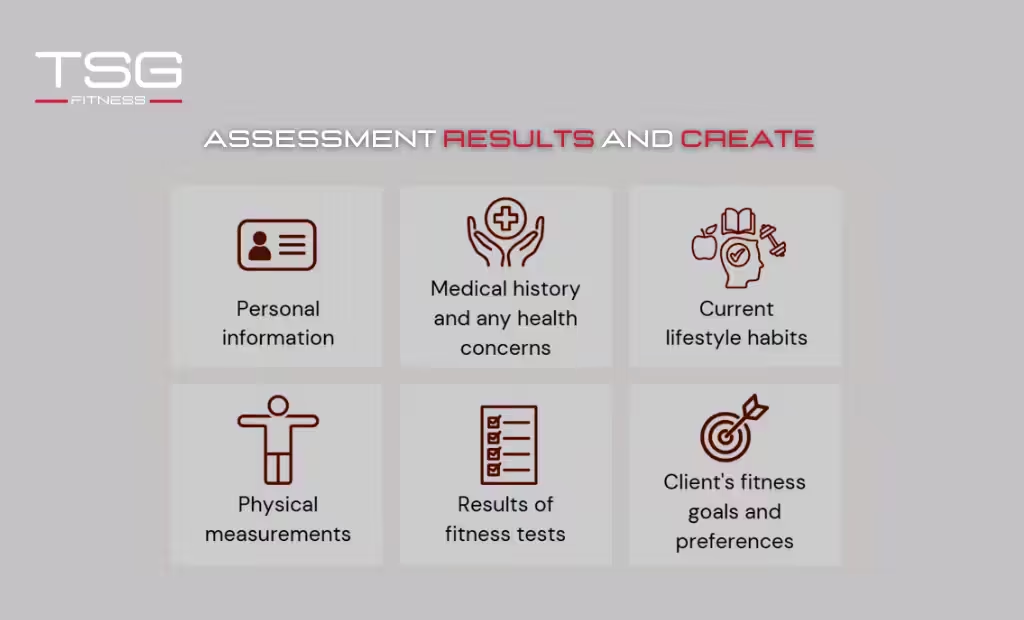
A well-crafted personalized training plan transforms raw fitness data into actionable workouts tailored to each client’s unique strengths, weaknesses, and goals. By interpreting assessment results accurately, trainers can design programs that optimize progress, prevent injury, and sustain motivation.
What Is a Personalized Training Plan?
A personalized training plan is an exercise program built on objective assessment data—posture, movement patterns, strength, endurance, and recovery readiness—to deliver targeted workouts. It aligns client goals (weight loss, performance, rehabilitation) with evidence-based exercise selection, periodization, and progression.
The Importance of Fitness Assessments
Fitness assessments provide the foundational data needed to avoid one-size-fits-all programming. They reveal imbalances, mobility restrictions, cardiovascular capacity, and psychosocial readiness. Without assessment, programs risk exacerbating weaknesses, causing plateaus, or leading to injury.
How to Conduct a Comprehensive Fitness Assessment
Assess Posture and Alignment
Photograph or visually inspect static posture for spinal curves, shoulder height, and pelvic tilt. Identify compensatory patterns that may predispose clients to pain or injury.
Analyze Movement Patterns
Use functional tests—squat, lunge, hinge, push, and pull—to assess joint mechanics and motor control. Note deviations such as knee valgus or lumbar hyperlordosis.
Test Core Strength and Flexibility
Perform plank holds, back extensions, and sit-and-reach tests to gauge trunk stability and hamstring length, key for safe lifting and daily activities.
Evaluate Cardiovascular Endurance
Measure heart-rate response via a submaximal treadmill, cycle, or field test. Establish baseline VO₂max estimates or time-trial distances to set aerobic training zones.
Measure Balance and Coordination
Use single-leg stands, tandem walks, or Y-balance tests to identify side-to-side differences and fall-risk factors.
Check Recovery and Mental Readiness
Assess sleep quality, stress levels, and motivation through questionnaires. Clients’ subjective readiness informs workout intensity and volume adjustments.
How to Interpret Assessment Results
Identifying Strengths and Weaknesses
Compare data against normative values and client goals. Highlight high-score areas (e.g., strong hip hinge) and deficits (e.g., limited shoulder mobility) to prioritize training focus.
Setting Realistic Goals Based on Data
Translate assessment findings into SMART goals—specific mobility improvements, strength gains, or endurance benchmarks—ensuring they are measurable and time-bound.
Avoiding Common Interpretation Mistakes
Don’t overemphasize single tests; view data holistically. Avoid basing programs on transient factors (e.g., occasional soreness) rather than consistent patterns.
Building Your Personalized Training Plan
Aligning Exercises with Client Goals and Fitness Level
Select foundational movements that address weaknesses and leverage strengths. For a client with poor core stability and running goals, combine planks with interval treadmill work.
Selecting Primary and Secondary Movements
Choose 3–5 primary lifts (squat, hinge, push, pull, lunge) and 2–3 auxiliary exercises (band draws, glute bridges) per session, balancing compound and isolation work.
Establishing Training Volume, Reps, and Periodization
Assign volume (sets × reps) based on goals: strength (3–6 reps), hypertrophy (8–12 reps), endurance (12+ reps). Implement linear or undulating periodization to vary intensity and avoid plateaus.
Incorporating Rest and Recovery Phases
Plan deload weeks every 4–6 weeks. Schedule active-recovery sessions (mobility, light cardio) to support adaptation and prevent overtraining.
Tailoring for Specific Needs (e.g., age, injury history)
Modify range of motion, loading schemes, and exercise selection to accommodate joint replacements, cardiovascular limitations, or chronic conditions.
Tracking Progress and Adjusting the Plan
Key Metrics to Monitor Over Time
Reassess posture, movement, strength (one-rep max or submax tests), endurance distances, and recovery indicators monthly or quarterly.
When and How to Reassess
Reassess every 6–8 weeks or when progress stalls. Use the same testing protocols for consistency.
Using Software Tools for Efficient Tracking
Leverage apps or platforms that log workouts, track metrics, and visualize trends—enabling data-driven adjustments and client accountability.
People Also Ask (Client-Focused FAQs)
What areas will the assessment cover?
Posture, movement patterns, core strength, flexibility, cardiovascular endurance, balance, and recovery readiness.
How will the results be used to design my plan?
Results pinpoint imbalances and fitness levels, guiding exercise selection, volume, and progression tailored to your goals.
What key findings should I focus on?
Prioritize consistent deficits that limit performance or pose injury risks (e.g., limited hip mobility, low aerobic capacity).
How often should I reassess my fitness?
Every 6–8 weeks to measure adaptation, refine goals, and update program phases.
What types of exercises will be in my plan?
A blend of compound movements (squat, hinge, push, pull), targeted accessory drills, and cardiovascular sessions based on assessment data.
How can I prevent injury during workouts?
Follow proper technique, gradual progression, balanced programming, and include mobility and recovery sessions.
What are the best ways to track my progress?
Use consistent testing, workout logs, heart-rate data, and software dashboards to monitor changes.
Do you offer nutritional guidance or support?
Many coaches integrate basic nutrition advice; refer to a registered dietitian for personalized meal plans if needed.
Can you provide tips for staying motivated?
Set short-term milestones, review progress visuals, vary workouts, and engage social support for accountability.
A robust, assessment-driven programming approach ensures each personalized training plan evolves with client progress—optimizing results, minimizing risk, and sustaining long-term engagement.