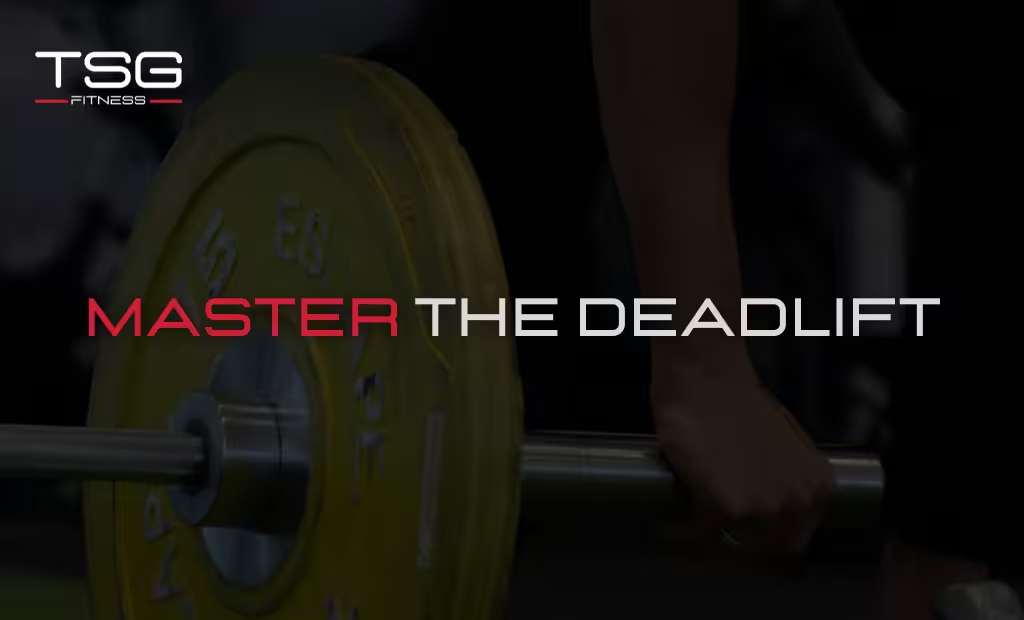
A properly executed deadlift is the cornerstone of full-body strength and athletic performance. At TSG Fitness, Egypt’s premier
Sports Performance Center Egypt
Our expert coaches combine biomechanical analysis and personalized programming to teach the deadlift basics, unlocking your potential for greater muscle activation, power, and injury resistance.
Deadlift Basics
The deadlift recruits nearly every major muscle group, from your hamstrings and glutes to your spinal erectors and core. A perfect squat guide starts with mastering the deadlift: it improves posture, enhances functional strength, and transfers to better performance in all lifts.
How to Deadlift
Main Deadlift Cues
Muscles Worked
Gluteus maximus, hamstrings, quadriceps, erector spinae, lats, traps, and core.
Feet
Position mid-foot under the barbell, toes pointed slightly outward, heels flat.
Grip
Hands shoulder-width outside legs; choose double-overhand or mixed grip to suit grip strength.
Arms
Keep arms straight and locked; they act as hooks.
Bar
Maintain contact with shins and thighs throughout the lift.
Hips
Hinge from the hips, not the lower back, to drive power.
Shoulder-blades
Keep your shoulders over or slightly in front of the bar.
Shoulders
Pinch your shoulder blades to stabilize the upper back.
Back Angle
Maintain a neutral spine from head to tailbone.
Shins
Shin vertical at the bottom; avoid excessive forward knee travel.
Knees
Knees and hips extend simultaneously for a smooth pull.
Lower Back
Keep a slight lordotic arch; avoid rounding.
Upper-Back
Brace lats and upper traps to resist spinal flexion.
Head
Fix gaze on the horizon to maintain neck neutrality.
Setup
- Approach bar so it touches the mid-foot.
- Hinge at the hips, bend the knees slightly, and grip the bar.
- Brace core and engage lats before un-racking.
Way Up
- Drive heels into the floor.
- Extend hips and knees together.
- Keep chest proud and bar close.
Way Down
- Push hips back first while maintaining spine.
- Bend knees after bar passes them.
- Lower to mid-shin before releasing tension.
Lockout
- Fully extend hips and knees.
- Squeeze glutes at the top without hyperextending the lower back.
Breathing
- Inhale deeply and brace before lift.
- Exhale forcefully at lockout.
Between Reps
- Reset bracing, foot placement, and chalk if needed.
Special Cases
Tall Guys
Use a wider stance and higher bar placement to shorten the range.
Big Guys
Stand back further to clear hips; focus on the hip hinge.
Small Hands
Mix grip or use straps if grip fails.
Grip Strength
Train with static holds (K-Force analysis at 600 ج.م for members) and grippers.
White Knuckling
Avoid excessive knuckle grip; maintain wrist neutrality.
Mixed Grip
Alternate hand positions each session to avoid imbalances.
Static Holds
Paused deadlifts build positional strength.
Grippers
Use hand grippers to support deadlift program progression.
Equipment
Barbell
Standard or powerlifting bar for varied flex.
Plates
Bumper or iron plates to suit the floor type.
Floor
Solid platform or rubber mats.
Chalk
Enhances grip; provided at TSG Fitness.
Shoes
Flat-soled (deadlift slippers) or moderate heel.
Belt
Supports the lower back during heavy lifts.
Straps
Assist grip when needed.
Gloves
Optional; may reduce bar feel.
Deadlift Mistakes
Deadlifting Top-Down
Always build from the floor to ensure a proper hinge.
Bouncing Your Deadlifts
Use controlled descent to maintain tension.
Not Touching The Floor
Reset each rep for consistency.
Squatting Your Deadlifts
Focus on hip hinge, not knee drive.
Leaning Back At The Top
Maintain a neutral spine to prevent hyperextension.
Shrugging At The Top
Lockout through the hips, not the shoulders.
Jerking Your Deadlifts
Smooth pull preserves form and reduces injury.
Dropping The Weight
Control eccentric phase or use bumper plates.
Using Mirrors
Avoid mirror over-reliance; focus on proprioception.
Deadlift Issues
Lower Back Pain
Check hip hinge and core bracing; consider K-Force power analysis (600 ج.م).
Lower Back Rounding
Ensure lats are braced and spine is neutral.
Arching Too Much
Activate core and glutes evenly.
Hips Rise Too Fast
Practice paused deadlifts off pins.
Hitting The Knees
Adjust bar path; keep bar close.
Bruised Shins
Use shin guards or lift smarter.
Callus Tears
File calluses regularly and wear thin gloves if needed.
Deadlift Variations
Sumo Deadlift
A wide stance reduces range and engages the adductors.
Trap Bar Deadlifts
Neutral grip machine alternative for a safer back.
Stiff-legged Deadlifts
Emphasizes hamstrings and glutes.
Romanian Deadlifts
Hip hinge focus for the posterior chain.
I’m Afraid of Deadlifts. What Should I Do?
Start with light kettlebell deadlifts, master hip hinge, and progress gradually under TSG Fitness supervision.
Can I Deadlift in the Smith Machine?
You can, but fixed bar path limits natural mechanics.
Should I Deadlift in the Power Rack?
Use rack pulls to work a partial range safely.
How Do I Prevent Calluses from Deadlifts?
File hands regularly and use chalk.
Why Do Deadlifts Hurt My Hands?
High friction and grip demands cause discomfort; chalk helps.
How Do I Remove Calluses on My Hands?
Soak and use a pumice stone after workouts.
How Do I Deadlift with Hex Plates?
Ensure solid footing; hex plates offer stability on uneven floors.
Should My Back Be Sore After Deadlifts?
Mild soreness is normal; sharp pain indicates form issues.
What’s a Good Lower Back Stretch?
Child’s pose, cat-camel, and thoracic bridges relieve tension.
Should I Squat My Deadlifts?
No—keep distinct movement patterns for both lifts.
Should I Drop My Hips into My Deadlift?
Hips should rise at the same rate as shoulders.
If Rounded Back Deadlifts Are Bad, Why Do Some Powerlifters Do It?
Some use slight rounding (technique off the floor) to shorten range under specific conditions—but not recommended for general lifters.
How Can I Increase My Deadlift?
Use progressive overload, accessory work, and techniques like rack pulls and deficit deadlifts under coaching.
How Can I Improve My Form?
Record video, use the mirror sparingly, and seek expert feedback at TSG Fitness.
Muscles Worked by the Deadlift
Comprehensive posterior chain engagement—glutes, hamstrings, erector spinae, and traps.
Deadlift Benefits
Full-body strength, improved posture, functional power, and hormonal response (growth hormone and testosterone boost).
How to Deadlift: 7 Simple Steps
- Approach the bar and set feet.
- Hinge hips and grip.
- Brace core.
- Drive feet into the floor.
- Extend hips and knees.
- Lock out.
- Lower with control.
Eddie Hall’s Guide to Deadlifting
Use heavy singles, high-volume back-off sets, and strongman-inspired training blocks.
Deadlifting: How Many Reps, Sets, and Which Weight?
Beginners: 3–5 sets of 5 reps at 70–80% 1RM.
Intermediates: 4–6 sets of 3–5 reps at 80–90% 1RM.
Advanced: Vary intensity and volume with periodization.
Why Is It Important to Have Good Deadlift Technique?
Proper technique maximizes force production and minimizes injury risk.
Are Deadlifts Bad for Your Back?
When performed correctly, deadlifts strengthen the back; poor form causes issues.
How to Deadlift for Beginners?
Start with kettlebell Romanian deadlifts and bodyweight hip hinges before progressing to barbells.
Deadlift Variations and Regressions
Use rack pulls, block pulls, and dumbbell deadlifts to address weaknesses.
Top 10 Deadlift Workouts
Incorporate heavy singles, cluster sets, deficit pulls, and tempo variations.
The Research
Studies show deadlifts produce superior posterior chain activation and hormonal responses compared to isolated exercises.
By following this deadlift guide at TSG Fitness, you’ll master perfect form, leverage specialized analysis services (FMS + K-Force at 1,000 ج.م discounted package), and achieve maximum results—transforming your strength and performance Fitness
.
 Contact Us