
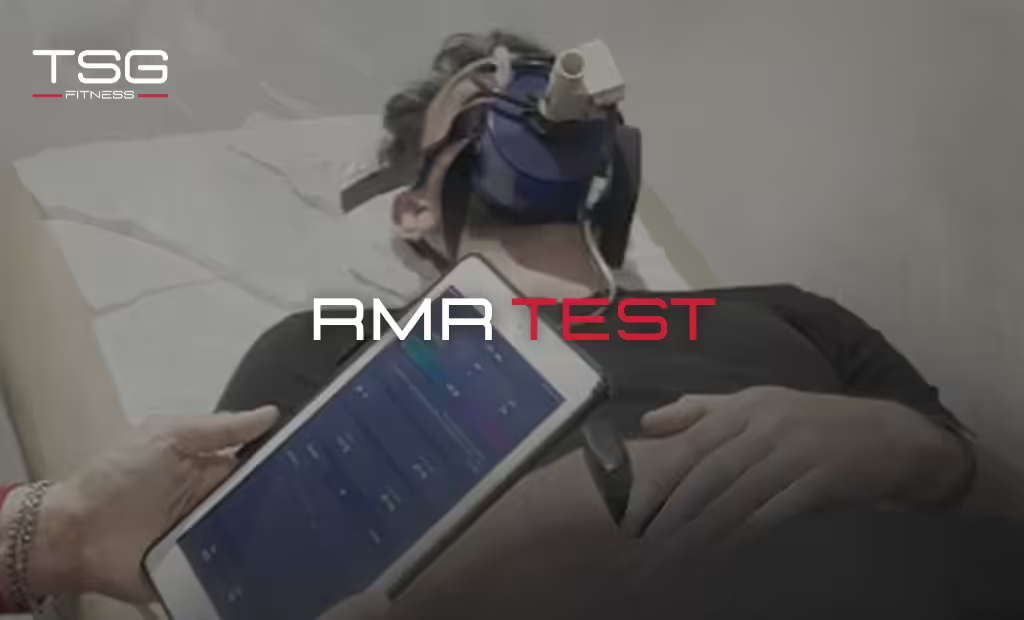
Accurately measuring your Resting Metabolic Rate (RMR)—the calories your body burns at complete rest—provides the foundation for effective weight management, personalized nutrition, exercise planning, and long-term health. At TSG Fitness, our RMR test delivers precise data that transforms guesswork into evidence-based action, helping you optimize energy intake, recovery, and performance with confidence.
What Is a Metabolic Rate Test?
A Metabolic Rate Test quantifies how many calories your body uses at rest to sustain vital functions such as breathing, circulation, and cell repair. Unlike generalized formulas, the RMR test at TSG uses indirect calorimetry—measuring oxygen consumption and carbon dioxide production—to deliver an individualized metabolic profile under controlled, fasting conditions.
How Does the Resting Metabolic Rate Test Work?
During the RMR test, you’ll recline in a quiet, temperature-controlled room after an overnight fast. A canopy or mouthpiece connected to a metabolic cart captures your breath for 15–20 minutes. The analyzer calculates energy expenditure based on gas exchange rates, producing an accurate daily caloric requirement at rest.
Sample Resting Metabolic Rate Test Report
Your RMR report includes:
- RMR Value (kcal/day): Exact number of calories burned at rest.
- Respiratory Quotient (RQ): Indicates fuel utilization ratio of carbs versus fats.
- Predicted vs. Measured Comparison: Highlights metabolic adaptations.
- Recommendations: Tailored calorie targets for weight loss, maintenance, or gain.
Benefits of Resting Metabolic Rate Testing
Weight Management
By knowing your precise RMR, you can create a targeted calorie deficit or surplus, avoiding under- or overeating that stalls progress.
Personalized Nutrition
RMR data informs individualized macronutrient distribution and meal timing—ensuring you fuel workouts and recovery optimally.
Exercise Planning
Accurate basal calories guide total daily energy expenditure calculations, allowing precise alignment of activity levels with nutritional intake.
Metabolic Health
Monitoring RMR reveals metabolic adaptations or slow-downs, enabling timely adjustments to diet and training before plateaus occur.
Energy Levels
Aligning food intake with true metabolic needs stabilizes energy throughout the day, reducing fatigue and cravings.
Chronic Disease Prevention
Maintaining metabolic balance supports healthy body composition and reduces risk factors for diabetes, heart disease, and other metabolic conditions.
How Do I Access Resting Metabolic Testing?
TSG Fitness members can schedule RMR assessments through the member portal or front desk. Non-members may book a standalone consultation. Packages combining RMR with InBody analysis and VO2Max testing are available at discounted rates.
What Happens During an RMR Test?
- Arrival & Preparation: Confirm fasted status and avoid caffeine or exercise for 12 hours.
- Rest Period: Recline quietly for 10 minutes to stabilize breathing.
- Data Collection: Breathe normally under the canopy for 15–20 minutes.
- Report Generation: Receive results and personalized recommendations within 48 hours.
How Do I Prepare for an RMR?
- Fast for 8–12 hours (water only).
- Avoid caffeine, nicotine, and exercise for 12 hours.
- Arrive well-hydrated and rested.
- Wear comfortable, loose clothing.
How Often Should I Test?
Test every 3–6 months or after major weight changes, training phases, or lifestyle shifts to ensure nutritional strategies remain aligned with evolving metabolic needs.
What Results Are Included with an RMR?
Your comprehensive report covers:
- Measured RMR (kcal/day)
- Predicted RMR via standard equations
- Respiratory Quotient (RQ)
- Daily calorie recommendations for goals
- Insights on metabolic adaptations
What Can Affect Your Resting Metabolic Rate?
- Lean Body Mass: More muscle elevates RMR.
- Age: RMR declines ~1–2% per decade after age 20.
- Hormones: Thyroid, cortisol, and sex hormones influence metabolic rate.
- Fasting & Diet: Extended caloric restriction can lower RMR.
- Medical Conditions: Conditions like hypothyroidism reduce RMR.
Frequently Asked Questions (FAQs)
How Do You Use RMR to Lose Weight?
Subtract 10–20% from your measured RMR to establish a sustainable calorie deficit, then distribute macros to preserve lean mass and support energy.
Is RMR Testing Accurate?
Indirect calorimetry remains the gold standard for RMR measurement, providing ±3% accuracy when protocols are followed correctly.
Do Long Fasts Slow Your RMR?
Extended fasting or severe calorie restriction triggers metabolic adaptation, reducing RMR over time. Regular monitoring prevents excessive metabolic slow-down.
Does a Keto Diet Affect Your RMR?
Short-term ketogenic diets may slightly raise RMR via increased protein and TEF. Long-term effects vary and should be evaluated through periodic testing.
Understanding your Resting Metabolic Rate is the pivotal first step toward optimized nutrition, training, and health. At TSG Fitness, our expert team and state-of-the-art equipment ensure precise, actionable insights—empowering you to fuel performance, manage weight, and sustain vitality with science-backed confidence. Schedule your RMR test today and take control of your energy needs for lasting success.