
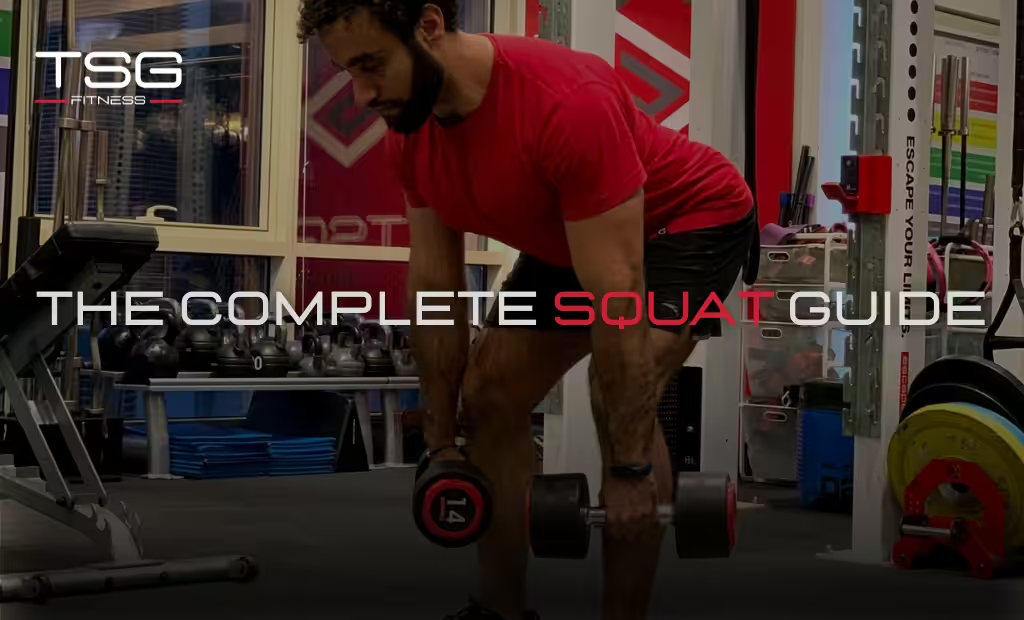
A solid squat guide is essential for lifters at any level to master technique, maximize muscle engagement, and avoid injury. This comprehensive walkthrough covers everything from proper form and programming to nutrition and recovery strategies that support squat performance.
Why Proper Squat Form Is Important
Maintaining correct squat form ensures even load distribution across the hips, quadriceps, hamstrings, and glutes. Good mechanics minimize joint stress, reduce low-back strain, and allow for progressive overload—translating to greater strength and muscle gains while preventing common injuries.
Understanding the Squat Technique
Muscles Worked
The squat is a compound movement that activates the quadriceps, gluteus maximus, hamstrings, adductors, erector spinae, and core stabilizers.
Correct Bar and Foot Positioning
- Barbell Back Squat: Place the barbell on the upper traps (high-bar) or rear delts (low-bar), grip just outside shoulders, and maintain tight lats.
- Foot Stance: Position feet shoulder-width apart, toes slightly turned out. This promotes natural hip-tracking and optimal torque.
Depth: How Low Should You Squat?
Aim for the hip crease below parallel to the knees (“breaking parallel”), which maximizes muscle activation. Mobility limits may dictate a slightly higher squat, but work toward full depth over time.
Step-by-Step Squat Execution
Pre-Squat Warm-Up & Mobility
Perform dynamic movements: leg swings, hip circles, bodyweight lunges. Use banded frog stretches and ankle dorsiflexion drills to improve joint mobility.
Basic Bodyweight Squat
Stand tall, feet shoulder-width apart. Sit hips back and down while keeping your chest up, then drive through your heels to stand. Master this before adding load.
Barbell Back Squat Setup and Execution
- Unrack securely, step back into position.
- Initiate by pushing hips back, bending knees in sync.
- Maintain neutral spine, drive knees out over toes.
- Ascend by pressing through the midfoot and heels, bracing the core.
Front Squat Technique
Rest the barbell across the front deltoids with elbows high. This upright torso position shifts emphasis to the quadriceps and upper back.
Pistol (Single-Leg) Squat Variation
Stand on one leg, extend the other forward. Lower down by hinging at the hip and knee until the hamstring touches the calf of the standing leg, then rise—challenging balance and unilateral strength.
Common Squat Mistakes and How to Fix Them
Knee Valgus and Tracking
Allowing knees to cave in stresses ligaments. Fix with banded squat practice and hip abductor strengthening.
Heels Lifting Off the Ground
Raised heels shift the load to the toes. Improve ankle mobility, or use slight heel elevation until flexibility improves.
Rounded Back or Chest Collapse
A flexed spine under load risks injury. Brace core, keep chest proud, and practice pause squats to ingrain correct posture.
Insufficient Depth
Shallow squats underutilize glutes and quads. Work on hip and ankle mobility, and squat to a box at target depth.
Designing Your Squat Program
Program Structure and Weekly Split
Integrate squats 1–3 times weekly. Example split:
- Monday: Heavy back squat
- Wednesday: Accessory lower-body work
- Friday: Front squat or variation
Progressive Overload Principles
Increase training load through weight, volume, or frequency. Track small increments (2.5–5 kg) each week to drive adaptation.
Frequency: How Often to Squat
Beginners may squat twice weekly; intermediates and advanced lifters adjust frequency based on recovery—1–3 sessions/week.
Integrating Full-Body and Squat Days
Alternate squat-focused days with upper-body or full-body sessions to balance recovery and overall development.
Calculating Training Loads and Tracking Progress
Determining Working Weights
Estimate one-rep max (1RM) via submax tests (e.g., 5RM × 1.1). Use percentages (70–85% 1RM) for strength phases and 60–70% 1RM for hypertrophy.
Using a Weekly Squat Progression Chart
Log weight, sets, reps, and perceived exertion. Chart trends to ensure progressive load increases and avoid plateaus.
Monitoring Volume, Intensity, and Recovery
Calculate weekly volume (sets × reps × weight). Adjust intensity and include deload weeks after 4–6 weeks of heavy training.
Nutrition, Recovery & Support for Squat Performance
Fueling Strength: Macronutrient Guidelines
Consume 1.6–2.2 g protein per kg body weight daily for muscle repair. Carbohydrates (4–6 g/kg) fuel training intensity; healthy fats support hormone balance.
Recovery Strategies and Mobility Work
Implement post-workout foam rolling, targeted stretching, and contrast baths. Prioritize 7–9 hours of sleep to optimize muscle protein synthesis and central nervous system recovery.
Supplements to Support Strength Gains
- Creatine monohydrate (3–5 g/day) for increased power output.
- Beta-alanine (3–6 g/day) to buffer muscular fatigue.
- Omega-3 fatty acids for inflammation control.
Final Tips and Frequently Asked Questions
Tips for a Deep and Effective Squat
- Push knees outward.
- Maintain a rigid torso.
- Breath-brace-breathe pattern: inhale before descent, brace core, exhale after completion.
Should I Train to Failure?
Limit failure training to accessory work. Avoid maximal efforts on main squat sets to preserve form and reduce injury risk.
Back Squat vs. Front Squat for Strength
Back squats allow heavier loads and posterior chain emphasis; front squats develop quad strength and core stability.
How Long to See Squat Progress?
With consistent training and nutrition, novices can expect strength gains within 4–6 weeks; muscle hypertrophy becomes noticeable in 8–12 weeks.
This squat guide empowers lifters with perfect squat technique, programming insights, and nutrition and recovery strategies. Master your squat to unlock new strength and muscle-building potential.