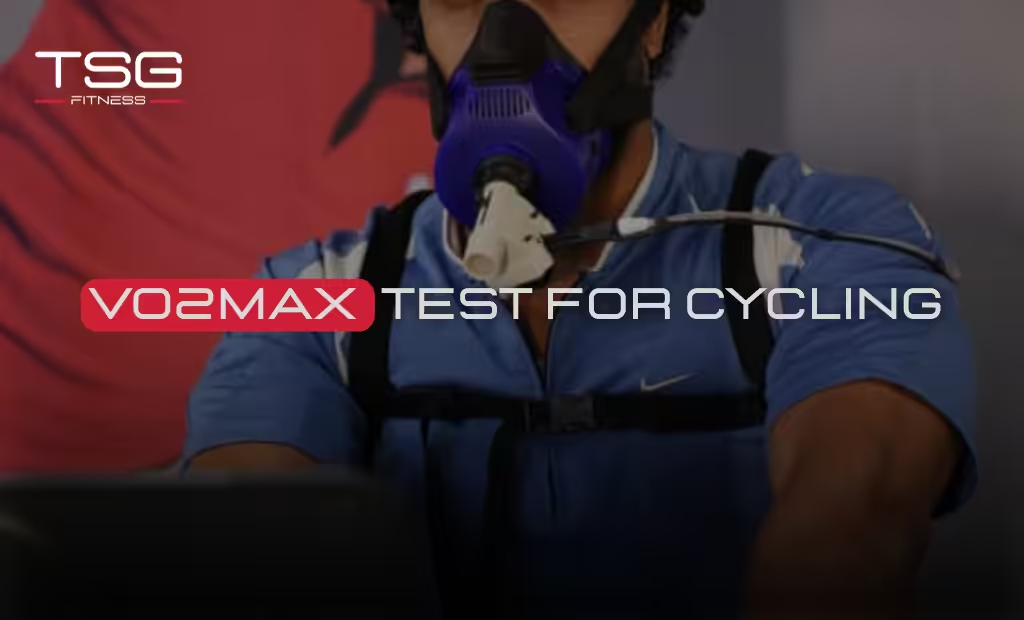
A VO2 Max Test for Running serves as the gold standard for assessing cycling performance, measuring the maximum amount of oxygen your body can utilize during intense exercise. Professional cycling VO2 max testing provides crucial insights into aerobic capacity, training zones, and performance potential for cyclists in Egypt. TSG Fitness offers comprehensive cycling performance testing using laboratory-grade equipment and expert protocols to help cyclists optimize their training and achieve peak performance.
What is VO2 Max Test for Cycling?
Understanding VO2 Max and Cycling Performance
VO2 max represents the maximum rate of oxygen consumption measured during incremental exercise, expressed in milliliters of oxygen consumed per kilogram of body weight per minute. For cyclists, this metric directly correlates with endurance performance, sustainable power output, and race results. Professional cyclists typically achieve VO2 max values between 70-85 ml/kg/min, with elite Tour de France riders reaching exceptional levels of 90-97 ml/kg/min.
The relationship between VO2 max and cycling performance is fundamental to training prescription and performance prediction. Higher VO2 max values indicate greater aerobic capacity, allowing cyclists to sustain higher intensities for longer durations. However, VO2 max represents just one component of cycling performance, alongside factors like lactate threshold, cycling economy, and neuromuscular power.
Why VO2 Max Testing Matters for Cyclists
VO2 max testing provides objective data for training zone establishment, performance monitoring, and goal setting for competitive cyclists. The test results enable coaches and athletes to design periodized training programs targeting specific physiological adaptations. Additionally, regular testing allows for tracking improvements over time and adjusting training intensities based on current fitness levels.
Professional cycling teams rely on VO2 max data to assess athlete potential, monitor training responses, and make strategic decisions about race preparation. For recreational cyclists, understanding VO2 max helps establish realistic performance goals and provides motivation through measurable progress tracking.
Types of Cycling VO2 Max Testing Methods
Laboratory VO2 Max Testing Protocol
Professional laboratory testing represents the gold standard for VO2 max assessment in cyclists. The protocol involves cycling on a stationary ergometer while wearing a mask connected to metabolic cart equipment that analyzes expired gases. The test begins at low intensity and increases in regular increments until exhaustion is reached.
A typical cycling VO2 max protocol starts at 40-80 watts, depending on fitness level, with increases of 10-30 watts every minute or stage. Continuous monitoring of heart rate, power output, and respiratory parameters provides comprehensive data throughout the test. The test terminates when the cyclist can no longer maintain the required power output despite maximal effort.
Astrand-Ryhming Cycling Test
The Astrand-Ryhming test protocol offers a submaximal alternative to maximal testing, requiring cyclists to maintain steady-state exercise at a moderate intensity for 6 minutes. Heart rate must remain between 125-170 beats per minute during the final minute of testing. The test uses the relationship between heart rate and oxygen consumption to estimate VO2 max through established formulas.
The Astrand protocol formula calculates VO2 max based on workload (watts), heart rate, age, and gender. While less accurate than maximal testing, this method provides a practical field-based assessment suitable for regular monitoring and screening applications.
Field Testing Options
Field-based VO2 max estimation for cyclists includes time trial tests, critical power testing, and smartwatch algorithms. These methods sacrifice precision for practicality and accessibility, allowing regular assessment without laboratory facilities. Popular field tests include 20-minute time trials, ramp tests to exhaustion, and standardized distance trials.
Modern cycling computers and power meters can estimate VO2 max using algorithms that analyze power output, heart rate, and training data. While convenient for regular monitoring, these estimates should be validated against laboratory testing for accuracy.
Professional VO2 Max Testing Protocol
Preparing Your Client for the VO2 Max Test
Pre-test preparation significantly impacts result accuracy and client safety. Cyclists should avoid intense training 24-48 hours before testing and arrive well-hydrated and rested. A light meal 2-3 hours prior provides adequate energy without causing gastrointestinal discomfort during exercise.
Client screening includes health history questionnaires, current medication review, and contraindication assessment. Proper bike fitting on the testing equipment ensures comfort and optimal biomechanics throughout the protocol. A clear explanation of test procedures and safety protocols helps reduce anxiety and maximize effort.
Performing the VO2 Max Test Step by Step
The testing session begins with equipment calibration and client setup, including mask fitting and heart rate monitor placement. A 10-minute warm-up at low intensity allows physiological preparation and equipment verification. The protocol then progresses through incremental stages until voluntary exhaustion or predetermined termination criteria are met.
Continuous monitoring throughout testing includes heart rate, power output, oxygen consumption, carbon dioxide production, and respiratory exchange ratio. Encouragement and safety monitoring ensure maximum effort while maintaining client safety. Post-test recovery monitoring continues until heart rate and breathing return to near-baseline levels.
Selecting the Right Testing Protocol
Protocol selection depends on client fitness level, sport specificity, and testing objectives. Highly trained cyclists may require more aggressive ramp rates (25-30 watts/minute) to reach VO2 max within 8-12 minutes. Less trained individuals benefit from gentler progressions (10-15 watts/minute) to ensure adequate warm-up and accurate threshold detection.
Sport-specific considerations include preferred cadence ranges, bike position, and testing duration. Road cyclists typically prefer seated positions and moderate cadences (80-100 rpm), while track cyclists may require higher cadences and aggressive positions for maximal specificity.
Aerobic vs Anaerobic Cycling Tests
Aerobic Cycling Test Methods
Aerobic testing protocols focus on sustained power output and oxygen utilization efficiency over extended durations. These tests typically last 8-20 minutes and emphasize steady-state metabolism rather than peak power production. Common aerobic tests include VO2 max protocols, lactate threshold testing, and time trial assessments.
Aerobic test results provide training zone data for base building and endurance development phases. The information guides prescription of moderate-intensity training volumes and helps establish sustainable race pacing strategies for long-distance events.
Anaerobic Cycling Test Protocols
Anaerobic testing evaluates the ability to produce high power outputs through non-oxidative energy systems. These protocols typically last 30 seconds to 5 minutes and assess peak power, power decline rates, and recovery capacity. Tests include Wingate protocols, repeated sprint tests, and neuromuscular power assessments.
Results from anaerobic testing inform training prescriptions for interval workouts, sprint development, and race-specific preparation. The data helps establish appropriate work-to-rest ratios for high-intensity training sessions and monitors adaptations to anaerobic training stimuli.
Sprint vs Endurance Testing
Sprint-focused testing emphasizes maximal power production over short durations (5-30 seconds), while endurance testing evaluates sustained efforts lasting minutes to hours. Each approach provides different physiological insights and training applications specific to cycling disciplines and individual athlete needs.
Track sprinters require detailed neuromuscular power profiles and fatigue resistance data, while road racers benefit more from aerobic capacity and threshold assessments. Time trial specialists need both aerobic and anaerobic components evaluated to optimize pacing strategies and training distribution.
Lactate Threshold Testing for Cyclists
Understanding Lactate Threshold
Lactate threshold cycling testing identifies the exercise intensity where lactate accumulation exceeds clearance capacity. This physiological marker represents a critical transition point between predominantly aerobic and anaerobic metabolism. For cyclists, lactate threshold power often correlates more strongly with endurance performance than VO2 max alone.
The lactate threshold typically occurs at 60-80% of VO2 max in trained cyclists, with elite athletes achieving higher percentages through specific training adaptations. This parameter is highly trainable and responds well to targeted threshold training protocols, making it a valuable metric for performance monitoring and training prescription.
Lactate Testing Protocol and Procedures
Professional lactate threshold testing involves incremental exercise on a cycling ergometer with blood sampling at regular intervals. The protocol begins at low intensity (typically 100-150 watts) and increases by 25-50 watts every 3-5 minutes. Small blood samples are collected from the fingertip or earlobe during brief pauses between stages.
Modern protocols often combine lactate sampling with gas exchange analysis to provide comprehensive metabolic profiling. This approach identifies both lactate thresholds (LT1 and LT2) and ventilatory thresholds (VT1 and VT2), creating detailed training zone prescriptions for periodized program development.
Interpreting Lactate Test Results
Lactate test interpretation focuses on identifying threshold points and establishing training zones. LT1 (aerobic threshold) typically occurs around 2 mmol/L lactate concentration, while LT2 (anaerobic threshold) occurs around 4 mmol/L. However, individual variation requires personalized threshold identification rather than relying solely on fixed lactate concentrations.
Training zones derived from lactate testing guide the distribution of training intensities throughout periodized programs. Zone 1 corresponds to intensities below LT1 for recovery and base building, Zone 2 spans LT1 to LT2 for aerobic development, and Zone 3 includes intensities above LT2 for specific threshold and VO2 max training.
VO2 Max Calculators and Result Analysis
Astrand-Ryhming Test Calculator
The Astrand-Ryhming test calculator uses mathematical formulas to estimate VO2 max from submaximal exercise data. Input variables include body weight, exercise workload (watts or kg-m/min), steady-state heart rate, age, and gender. The calculation applies age correction factors to account for declining maximal heart rate with advancing age.
Online calculators simplify the process by automating formula calculations and providing instant results. However, accuracy depends on proper test execution, including adequate warm-up, steady-state achievement, and appropriate workload selection for the target heart rate range.
VO2 Max Test Calculator for Cycling
Various VO2 max calculator cycling tools exist for different testing protocols and field assessments. Power-based calculations use critical power or functional threshold power data combined with body weight to estimate aerobic capacity. Time trial-based formulas incorporate distance, duration, and environmental factors for field-based assessments.
Modern cycling computers and training software provide algorithm-based VO2 max estimates using accumulated training data. These systems analyze power output patterns, heart rate responses, and performance metrics to continuously update fitness estimates without formal testing requirements.
Example Results for Cyclists
Typical VO2 max values for male cyclists range from 50-80 ml/kg/min for recreational riders, 70-85 ml/kg/min for competitive cyclists, and 85-95+ ml/kg/min for professional athletes. Female cyclists generally achieve values 10-15% lower due to physiological differences in hemoglobin concentration and cardiac output capacity.
Competitive cyclists in Egypt should target VO2 max values above 60 ml/kg/min for men and 50 ml/kg/min for women to be competitive at regional levels. National and international competition typically requires values exceeding 70 ml/kg/min for men and 60 ml/kg/min for women, depending on cycling discipline and event duration.
VO2 Max Testing at TSG Fitness Egypt
Professional Cycling Performance Testing
TSG Fitness provides comprehensive cycling performance testing Egypt services using laboratory-grade equipment and certified exercise physiologists. The facility offers complete metabolic profiling including VO2 max, lactate threshold, and power testing protocols specifically designed for cycling applications.
Testing services include pre-test consultations, detailed result interpretation, and personalized training recommendations based on individual goals and competitive objectives. The scientific approach ensures accurate, reliable data that serves as the foundation for evidence-based training program development.
Equipment and Accuracy at TSG
TSG Fitness utilizes professional-grade metabolic carts, precision cycling ergometers, and calibrated power meters to ensure testing accuracy. The equipment meets international standards for exercise testing and undergoes regular calibration procedures to maintain measurement precision.
The facility’s commitment to accuracy extends to staff certification and protocol standardization. Certified exercise physiologists conduct all testing procedures following established guidelines to ensure consistent, reliable results across testing sessions and between different clients.
Cycling Studio and Testing Facilities
The TSG cycling studio testing environment provides a controlled setting optimized for accurate physiological assessment. Climate control, proper ventilation, and noise management create ideal conditions for maximal effort testing while maintaining client comfort and safety.
State-of-the-art cycling-specific equipment allows for biomechanically appropriate testing positions and power measurement accuracy. The facility can accommodate various bike types and setup preferences to ensure sport-specific testing conditions that translate directly to outdoor cycling performance.
Interpreting and Improving Your Cycling VO2 Max
Understanding Your Test Results
VO2 max test results should be interpreted within the context of age, gender, training history, and competitive goals. Percentile rankings help understand performance relative to population norms, while sport-specific comparisons provide insight into competitive potential within cycling disciplines.
Beyond absolute VO2 max values, additional metrics like oxygen pulse, ventilatory efficiency, and lactate kinetics provide comprehensive fitness assessment. These parameters help identify specific physiological strengths and limitations that inform targeted training interventions.
Training Protocols to Improve VO2 Max
VO2 max improvement training for cyclists emphasizes high-intensity interval training at 90-110% of VO2 max power. Effective protocols include 4-8 intervals of 3-8 minutes duration with equal or slightly shorter recovery periods. Training frequency of 2-3 sessions per week maximizes adaptations while allowing adequate recovery.
Longer intervals (6-8 minutes) at 90% VO2 max power have shown superior improvements compared to shorter, higher-intensity efforts. This approach allows more time spent at or near VO2 max, maximizing the training stimulus for aerobic system adaptations.
Cycling-Specific Training Plans
Periodized training plans integrate VO2 max development within broader fitness and performance objectives. Base building phases emphasize aerobic capacity development through moderate-intensity training, while build phases incorporate specific VO2 max intervals and race preparation efforts.
TSG Fitness designs individualized training plans based on comprehensive testing results, competitive goals, and lifestyle factors. The programs integrate VO2 max training with lactate threshold work, neuromuscular power development, and recovery protocols for optimal adaptation and performance gains.
People Also Ask
How accurate is the Astrand-Ryhming test for cyclists?
The Astrand-Ryhming test provides reasonable VO2 max estimates with standard errors of approximately 10-15% compared to direct measurement. Accuracy depends on proper protocol execution, appropriate workload selection, and individual factors affecting heart rate response to exercise.
What is a good VO2 max for competitive cyclists in Egypt?
Competitive male cyclists in Egypt should target VO2 max values above 65 ml/kg/min, with elite performers exceeding 75 ml/kg/min. Female competitive cyclists should aim for values above 55 ml/kg/min, with elite athletes reaching 65+ ml/kg/min for national and international competition.
Where can I get professional cycling VO2 max testing in Cairo?
TSG Fitness in Sheikh Zayed offers comprehensive cycling VO2 max testing using professional equipment and certified staff. The facility provides complete metabolic profiling specifically designed for cycling performance assessment and training optimization.
How does lactate threshold testing differ from VO2 max?
Lactate threshold testing identifies sustainable exercise intensities for prolonged efforts, while VO2 max measures maximum aerobic capacity. Both tests provide complementary information for training prescription, with lactate threshold often being more predictive of endurance performance than VO2 max alone.
What equipment does TSG use for cycling performance testing?
TSG Fitness utilizes professional metabolic carts, precision cycling ergometers, power meters, and heart rate monitoring systems for comprehensive cycling performance assessment. All equipment meets international standards and undergoes regular calibration to ensure accuracy and reliability.
How often should cyclists test their VO2 max?
Cyclists should perform VO2 max testing every 3-4 months to monitor training adaptations and adjust program prescriptions. More frequent testing may be warranted during intensive training phases or when making significant training methodology changes.
Can I improve my cycling VO2 max at TSG Fitness?
Yes, TSG Fitness provides specialized training programs designed to improve cycling VO2 max through scientifically-based interval training protocols and comprehensive performance monitoring. The programs integrate testing results with personalized training prescriptions for optimal adaptation.
What is the cost of cycling performance testing?
Testing costs vary depending on the specific protocols requested and package options available. Contact TSG Fitness directly for current pricing information and package details tailored to individual testing needs and budget considerations.
VO2 Max Test for Running in cycling provides essential data for performance optimization, training prescription, and competitive goal setting. TSG Fitness Egypt offers comprehensive cycling performance testing services using professional equipment and expert interpretation to help cyclists achieve their maximum potential through evidence-based training approaches.