
How to Interpret Assessment Results and Create a Personalized Training Plan
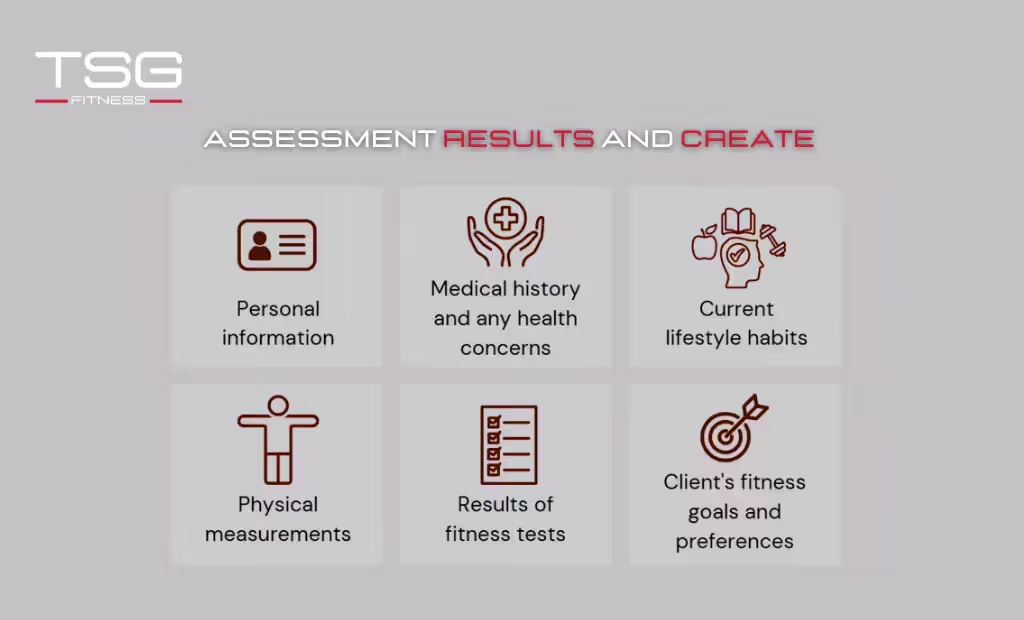
Assessment Results and Create

A well-crafted personalized training plan transforms raw fitness data into actionable workouts tailored to each client’s unique strengths, weaknesses, and goals. By interpreting assessment results accurately, trainers can design programs that optimize progress, prevent injury, and sustain motivation. What Is a Personalized Training Plan? A personalized training plan is an exercise program built on objective […]

Fit Seniors Program: How to Stay Fit While Aging in Place

Fit seniors program

Maintaining strength, mobility, and independence is essential for older adults who wish to continue living safely and comfortably at home. A well-designed Fit Seniors Program combines varied workouts, safety measures, and motivational strategies to support healthy aging, boost confidence, and reduce fall risk. Why Fitness Is Important for Seniors Regular exercise preserves muscle mass, bone […]

Plant-Based vs. High-Protein Diets: Choosing the Best for Your Fitness Goals

Choosing the Best for Your Fitness Goa

When it comes to sculpting your physique, boosting performance, and optimizing health, the debate often centers on plant-based versus high-protein diets. Both approaches offer distinct advantages—and potential pitfalls—depending on your goals, lifestyle, and biological response. This guide breaks down each strategy, explores how they impact weight-loss plateaus, and provides actionable tips to push past stagnation […]

Building a Custom Exercise Plan: 7 Steps from Assessment to Execution
Building a Custom Exercise Plan: 7 Steps from Assessment to Execution Designing a workout program tailored to your goals, schedule, and environment ensures you stay motivated, progress safely, and enjoy consistent results. Follow these seven steps—from initial assessment to ongoing adjustments—to build a plan that fits your life and transforms your fitness journey. Step 1: Determine Your Starting Point Before writing any exercise prescription, gather baseline information: Goals: Define what you want—fat loss, muscle gain, improved endurance, or a combination. Use the SMART framework (Specific, Measurable, Achievable, Relevant, Time-bound) to crystallize targets. Time Availability: Be realistic about how many days per week and minutes per session you can commit. Even 30 minutes four times weekly can yield significant change if structured correctly. Training Environment: Identify where you’ll work out—gym, home, or outdoor space. Equipment access shapes exercise selection and program variation. Step 2: Conduct a Comprehensive Assessment A thorough evaluation ensures your program addresses strengths, limitations, and priorities: Fitness Level: Measure cardiovascular capacity (e.g., a 3-minute step test), muscular strength (e.g., estimated one-rep max testing), and flexibility (e.g., sit-and-reach). Movement Screening: Assess fundamental patterns—squat depth, lunge control, core stability—to spot imbalances or restrictions. Lifestyle and Health History: Account for prior injuries, medical conditions, and daily activity levels to mitigate risk and optimize recovery. Step 3: Structure Your Workout Split A workout split defines how to distribute training sessions across the week, balancing volume and recovery: Full-Body Workouts: Ideal for beginners or limited time—train all major muscle groups each session, 3×/week. Upper/Lower Split: Four sessions/week alternating upper and lower body. Enhances focus and volume per region. Push/Pull/Legs: Six sessions/week dividing movements into pushing, pulling, and lower-body days. Suitable for advanced trainees. Frequency and Recovery: Aim for 48 hours between sessions targeting the same muscle group. Schedule at least one full rest day. Step 4: Select Appropriate Exercises Choose movements that align with your goals, environment, and assessment findings: Compound Movements: Prioritize multi-joint exercises (squats, deadlifts, presses, rows) for efficient calorie burn and strength gains. These burn up to 30% more calories than isolation work. Accessory Movements: Include single-joint exercises to address weaknesses or imbalances (bicep curls, calf raises, lateral raises). Progression Options: For each exercise, plan progressions (increased load, volume, or complexity) and regressions (bodyweight variations) to match your current ability. Step 5: Incorporate Warm-Up and Cool-Down A structured warm-up primes your body and reduces injury risk: Dynamic Mobility: Spend 5–10 minutes on movement drills (leg swings, arm circles, hip openers) targeting joints you’ll use heavily. Activation Exercises: Use glute bridges, plank variations, and band pull-aparts to engage stabilizing muscles. After training, cool down with 5 minutes of light cardio and static stretching for major muscle groups to aid recovery and flexibility. Step 6: Create a Weekly Schedule Map out each session with specific exercises, sets, reps, and rest intervals: Monday – Strength (Squat, Bench Press, Row) Tuesday – HIIT (6 × 30 s sprints with 1 min rest) Wednesday – Mobility/Active Recovery (Yoga flow, foam rolling) Thursday – Strength (Deadlift, Overhead Press, Pull-Up) Friday – Endurance (30 min steady-state cardio at 70–80% max HR) Saturday – Skills or Sport-Specific Drills (plyometrics, agility ladder) Sunday – Rest Use a gym schedule template or personal-training software to track conditions, loads, and notes. Step 7: Monitor Progress and Adjust Ongoing evaluation ensures your plan remains effective: Performance Tracking: Record weights, reps, distances, and times each session. Aim for incremental improvements of 2–5% every 1–2 weeks. Body Metrics: Periodically reassess strength (estimated 1RM), endurance (beep test level), and body composition (InBody scan or skinfolds) to verify adaptation. Program Tweaks: If progress stalls after 4–6 weeks, adjust variables—add sets, increase weight, vary tempo, or modify exercise selection—to renew stimulus. Recovery Status: Monitor sleep quality, muscle soreness, and energy levels. Use auto-regulation strategies (reducing volume or intensity) when signs of overreach appear. By following these seven steps—assessing your starting point, structuring your split, selecting targeted exercises, and continuously monitoring—you’ll craft a custom workout plan that aligns with your goals, schedule, and fitness level. Consistent application and strategic adjustments ensure sustainable progress and help you build the body and performance you desire.

Designing a workout program tailored to your goals, schedule, and environment ensures you stay motivated, progress safely, and enjoy consistent results. Follow these seven steps—from initial assessment to ongoing adjustments—to build a plan that fits your life and transforms your fitness journey. Step 1: Determine Your Starting Point Before writing any exercise prescription, gather baseline […]

How to Read and Act on Your InBody Scan Results for Real Progress
InBody Scan Results for Real Progress

Understanding your body composition is the cornerstone of effective fitness and health planning. Unlike simple weight measurements, an InBody scan provides detailed insights into muscle mass, fat distribution, water balance, and more—allowing you to move beyond guesswork and set precise, achievable goals. At TSG Fitness, we leverage InBody technology to empower clients with actionable data […]

How a Sports Performance Assessment Transforms Your Workout Plan: Case Studies
How a Sports Performance Assessment Transforms Your Workout Plan: Case Studies In today’s data-driven athletic world, a one-size-fits-all workout simply won’t cut it. Sports performance assessments deliver the insights required to personalize training, eliminate guesswork, and unlock measurable improvement. By combining physiological testing, biomechanical analysis, and sport-specific metrics, these assessments reveal each athlete’s unique strengths, weaknesses, and response patterns—then transform this data into actionable, results-focused workout plans. This article explores how cutting-edge performance analysis reshapes training strategies. Through real-world case studies, you’ll see how athletes across levels—from weekend warriors to elite competitors—dramatically enhance efficiency, reduce injury risk, and exceed their goals. What Is Sports Performance Analysis and Why It Matters Sports performance analysis encompasses the systematic collection and interpretation of data that describe an athlete’s physical output, movement quality, tactical decisions, and physiological responses. Rather than relying on coach memory or intuition, performance analysis applies objective measurements—heart rate variability, sprint times, force output, motion-capture metrics—to deliver a comprehensive performance profile. Key benefits include: Personalized training prescriptions that match an athlete’s current capacity and desired progression. Identification of hidden inefficiencies or compensations that impose injury risk. Reliable tracking of adaptation to training loads, ensuring optimal training stress and recovery balance. Tactical insights that align physical preparation with sport-specific demands. The Analytics Revolution: From Manual Logs to Real-Time Metrics Historically, coaches relied on anecdotal reports and manual notation to guide training. Today’s ecosystem integrates wearable sensors, GPS tracking, force plates, and video analysis software—feeding real-time data into cutting-edge analytics platforms. These tools automate the extraction of performance indicators and visualize trends that would be impossible to discern otherwise. Internal and External Data Sources Internal: Heart rate, blood lactate, VO₂ kinetics, muscle oxygenation. External: GPS-derived speed/acceleration, movement trajectories, contact forces. Combining both sets in a unified dashboard empowers coaches to understand not only what happened during training or competition, but why it happened—and how to respond in subsequent sessions. Transformative Case Studies Case Study 1: Sprint Efficiency in a Collegiate Track Athlete A female 400m runner plateaued despite high training volume. A performance assessment revealed ground-contact times 12% slower on her left foot and suboptimal ankle dorsiflexion. Targeted plyometric drills and joint-mobility sessions reduced asymmetry by 8% in four weeks, translating into a 0.4-second personal best. Case Study 2: Volume Management for a Marathoner A seasoned marathoner struggled with late-race fatigue and repeated Achilles flare-ups. Physiological testing uncovered a low lactate threshold relative to VO₂ max, indicating inefficient running economy. By shifting 20% of weekly mileage toward threshold intervals and strength sessions, her lactate threshold improved by 15%, enabling even pacing and pain-free long runs. Case Study 3: Tactical High-Intensity Demands in Team Sport A soccer midfielder showed impressive aerobic capacity but struggled to sustain high-speed efforts in match-day scenarios. GPS and accelerometer data pinpointed a drop-off in sprint frequency after the 60th minute. Through targeted repeated-sprint training and neuromuscular conditioning, his high-intensity work-rate improved by 25% in six weeks, resulting in more impactful late-game contributions. From Assessment to Personalized Workout Plan Sports performance assessments follow a clear workflow: Initial Testing & Baseline Profiling Cardiovascular, strength/power, movement-pattern, and sport-specific drills establish a comprehensive baseline. Data Interpretation & Goal Setting Specialists integrate results to prioritize training objectives—whether boosting power, enhancing endurance, correcting movement deficits, or improving tactical execution. Customized Program Design Strength, conditioning, mobility, and recovery modules are tailored to each athlete’s physiological and biomechanical profile. Progress Monitoring & Adjustment Ongoing mini-assessments detect adaptation plateaus or emerging imbalances, prompting dynamic program tweaks to sustain optimal progress. Tools of the Trade: Technology Enabling Precision Performance analysis leverages specialized software—such as inertial-sensor platforms, force-plate analytics, and video-tagging suites—to collect, process, and visualize data. By automating computations like expected goals (xG) in team sports or power-duration modeling in endurance athletes, these tools equip coaches with immediate, actionable intelligence. Maximizing Your Results: Preparing for Assessment To get the most from a performance assessment: Choose a Specialized Facility with sport-specific testing protocols. Be Honest About Your Training History and any pain or compensations. Ensure Rested & Hydrated Condition so results reflect true capacity rather than fatigue. Ask Questions about how data will shape your training plan. The Future of Personalized Training Advances in wearable technology and artificial intelligence promise even more individualized insights—real-time feedback on movement patterns, predictive models of injury risk, and adaptive workout programs that evolve with each session’s data. As assessments become integrated into routine training, the distinction between testing days and training days will blur, creating a seamless performance-optimization ecosystem. Conclusion: Data-Driven Excellence The era of “cookie-cutter” workouts is over. Sports performance assessments transform training by providing objective, sport-specific insights that drive smarter programming, faster progress, and injury prevention. Whether you’re a weekend athlete seeking better results or an elite competitor chasing podium finishes, integrating comprehensive performance analysis into your routine ensures every session counts. Contact TSG Fitness today to schedule your personalized sports performance assessment—and unlock the tailored path to your best workout plan yet.

In today’s data-driven athletic world, a one-size-fits-all workout simply won’t cut it. Sports performance assessments deliver the insights required to personalize training, eliminate guesswork, and unlock measurable improvement. By combining physiological testing, biomechanical analysis, and sport-specific metrics, these assessments reveal each athlete’s unique strengths, weaknesses, and response patterns—then transform this data into actionable, results-focused workout […]

Functional Fitness Training | Move Better with TSG Fitness

Functional Fitness

Imagine a fitness program that not only makes you stronger but also helps you move, lift, bend, twist, and carry things more easily in daily life. That’s exactly what functional fitness training delivers. At TSG Fitness, we believe functional fitness isn’t just a trend — it’s a transformational approach that equips your body for real-world […]

Personalized nutrition consultation in Egypt | Customized diet plans from TSG
Personal Nutrition

In today’s health-conscious world, one-size-fits-all diets just don’t cut it. Your body, your lifestyle, your goals — they’re unique. That’s why a personal nutrition consultation is a game-changer, especially when guided by expert coaches like those at TSG Fitness in Egypt. Forget cookie-cutter meal plans and frustrating guesswork. With tailored diet plans designed for your […]

Rowing Workout Plan for Beginners | Start Strong with TSG Fitness
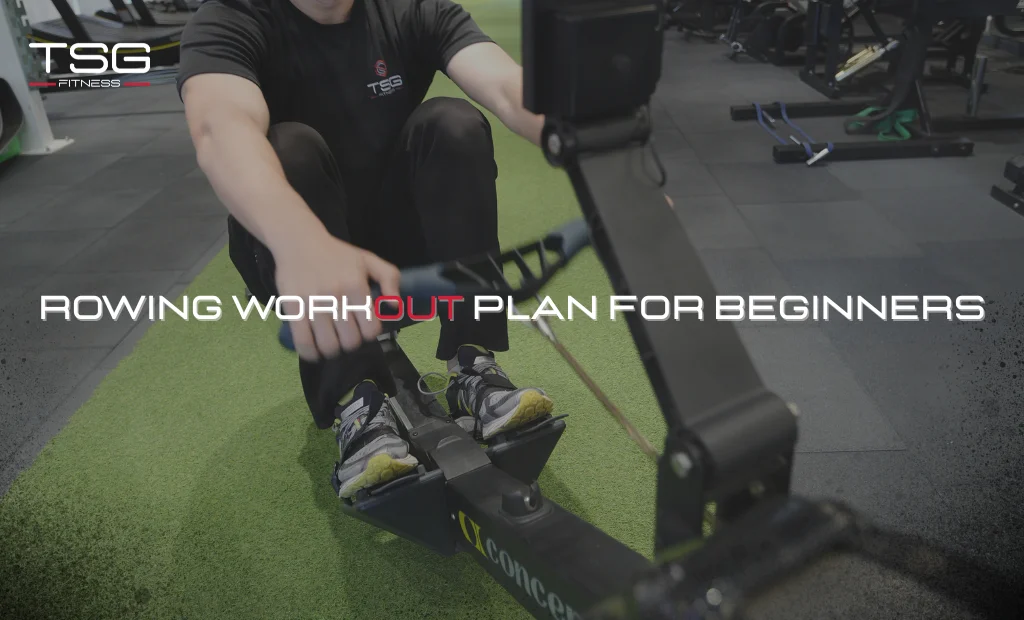
Rowing Workout Plan for Beginners

If you’re looking for a total-body workout that boosts endurance, builds strength, and torches calories — all while being low-impact on your joints — rowing is your golden ticket. Often overlooked in favor of treadmills or stationary bikes, the rowing machine offers one of the best bang-for-your-buck cardio workouts in the gym. But here’s the […]

The Best Gym Cardio Workout Plans to Boost Endurance and Burn Fat
gym cardio workout plan

If you’ve ever walked into a gym, looked at the rows of treadmills, ellipticals, and bikes, and wondered, “Where do I even start?”, you’re not alone. Cardio can feel overwhelming with so many options, but the truth is, the best gym cardio workout plans are structured, purposeful, and tailored to your goals. Whether you’re looking […]